
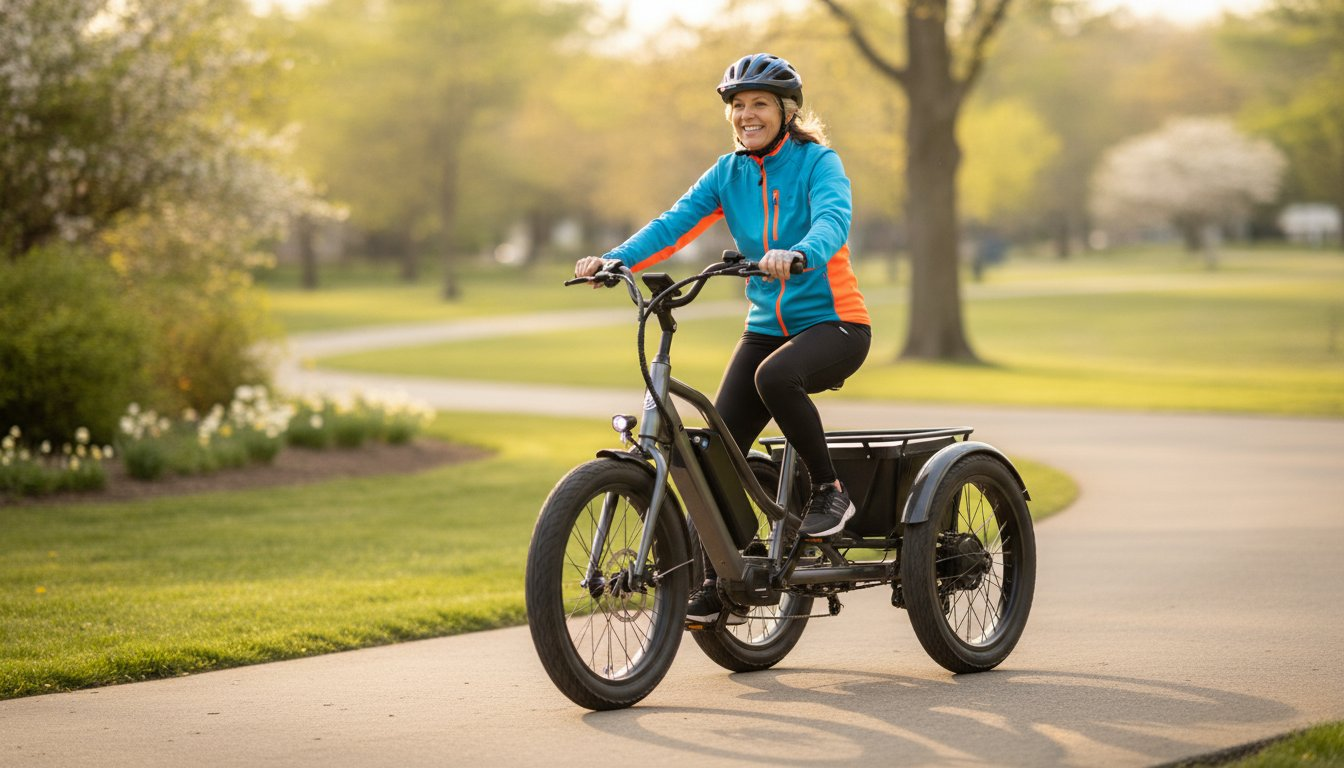
The third wheel on an electric trike for adults is often seen as a simple guarantee of balance, but true stability depends far more on frame geometry and professional mechanical calibration than just having an extra tire. If the center of gravity is too high or the assembly is rushed, even three wheels won’t prevent that uneasy feeling during a sharp turn. You deserve a ride that feels planted and predictable, whether you’re crossing a gravel path or navigating a busy neighborhood intersection.
We know that regained mobility shouldn’t come with the anxiety of tipping over or the headache of confusing maintenance requirements. It’s frustrating to face a high-step frame or worry about whether your battery range will leave you stranded miles from home. This guide will show you how to choose the perfect trike by focusing on the 2026 technical specs that actually impact your safety. We’ll explore everything from UL-certified electrical systems and hydraulic braking power to the latest state-level regulations, giving you the tools to ride with total confidence in your vehicle’s integrity.
Key Takeaways
- Understand why the electric trike for adults provides a unique “zero-speed” balance advantage that traditional bicycles simply cannot match.
- Learn how a rear-axle differential and strategic motor placements ensure smooth, safe cornering even on uneven or loose terrain.
- Compare fat tire, folding, and cargo models to find the specific frame design that fits your storage limits and lifestyle goals.
- Identify the non-negotiable safety features, such as hydraulic disc brakes and low step-through heights, that guarantee a confident and accessible ride.
- Discover why professional assembly and multi-point safety inspections are essential for ensuring the long-term mechanical integrity of your vehicle.
What is an Electric Trike for Adults and Why Is It Growing in Popularity?
An Electric tricycle, or e-trike, is a three-wheeled mobility vehicle that combines traditional pedaling with a powerful electric motor and a lithium-ion battery. Unlike a standard bicycle, this machine provides a stable platform that remains upright without any effort from the rider. It’s a specialized tool designed to bridge the gap between walking and driving, offering a quiet, emission-free way to move through your community. The modern electric trike for adults isn’t just a novelty; it’s a sophisticated piece of engineering that is rapidly changing how people think about personal transportation.
The surge in popularity is backed by impressive data. The global electric trike market was valued at over $2.6 billion in 2020 and is projected to reach over $11.45 billion by 2026. This growth is fueled by a collective shift toward sustainability. Many people are now choosing e-trikes to replace a second car for local errands, grocery runs, and urban commuting. With a compound annual growth rate of 27.39% according to industry projections, it’s clear that more adults are prioritizing stable, efficient, and eco-friendly mobility. The inclusion of low step-through frames has also made these vehicles incredibly inclusive, allowing riders of all physical levels to mount and dismount with ease.
The Core Benefits of the Three-Wheel Design
Stability is the primary reason riders choose a three-wheel configuration. The “tripod effect” creates a base that prevents the most common cycling falls, especially when starting or stopping. You don’t need to maintain a minimum speed to stay balanced. This provides immense psychological comfort; you can stop at a red light or pause to check a map without ever putting your feet on the ground. Additionally, the extra wheel allows for a significantly increased payload capacity. Whether you’re hauling a week’s worth of groceries, a large pet, or heavy gardening gear, the weight is distributed across a wider rear axle, keeping the ride smooth and manageable.
Who Should Consider an Electric Trike?
An electric trike for adults is an ideal choice for several specific groups. Seniors often turn to e-trikes to maintain an active lifestyle and enjoy the outdoors without the balance risks associated with two-wheeled bikes. Commuters who need to transport heavy cargo or make professional deliveries find the stable platform far superior for carrying weight. Finally, riders with physical limitations or those recovering from injuries find that the assist from the motor and the inherent stability of the frame make cycling accessible again. It’s about regaining independence and moving with total confidence.
This newfound independence often extends to other areas of life, where simplifying daily tasks allows for more relaxation; for example, many active adults choose professional services like AlphaLux Cleaning to maintain their homes, ensuring their living space receives a higher standard of care.
The Technology of Balance: Motors, Batteries, and Drive Systems
Understanding the internal mechanics of an electric trike for adults is essential for ensuring a safe, predictable ride. Most entry-level models use front-hub motors because they’re easier to manufacture. However, front-hub motors can lose traction on steep inclines or loose gravel since the weight of the rider and cargo sits over the rear wheels. A rear-hub motor provides much better “push” and traction, keeping the vehicle planted. To make these rear-wheel systems work effectively, a differential is required. A differential is the mechanical component allowing the rear wheels to spin at different speeds during turns. Without it, the trike would try to push in a straight line while you’re turning, which creates a skipping sensation or a risk of tipping.
Battery range isn’t a fixed number; it’s a calculation based on your specific environment. If you’re hauling 50 pounds of cargo on a hilly route, your mileage will drop compared to a flat fitness ride. Most 2026 models feature intelligent power-assist systems that help manage this energy use. You can engage the motor through pedal assist, where the sensors detect your effort and add power, or use a throttle for instant acceleration without pedaling. If you aren’t sure which drive system fits your local terrain, you can explore our professionally tuned models to see these systems in action.
Motor Power and Torque Essentials
Torque is the force that gets you moving from a dead stop. This matters much more than top speed when you’re riding a heavy trike. A 750W motor offers the “grunt” needed for climbing hills or carrying heavy loads, whereas a 500W motor is better suited for flat, paved paths. Remember that federal law in the USA limits e-trikes to 750W and a maximum speed of 20 mph on motor power alone to maintain their classification as low-speed electric bicycles.
Battery Safety and UL Certification
Safety is paramount when dealing with lithium-ion technology. As of 2026, states like California require all new e-bikes and trikes to comply with safety standards like UL 2849. This certification ensures the battery and electrical system have been tested by an accredited laboratory to prevent fire risks. Removable battery packs are a major advantage, allowing you to charge the battery inside while the trike stays in a shed or garage. To maximize longevity, don’t leave your battery at 0% or 100% for long periods; keeping it between 20% and 80% during storage is a proven way to extend its service life.

Choosing Your Style: Fat Tire, Folding, and Cargo E-Trikes
Selecting the right style depends on where you plan to ride and where you’ll store the vehicle. An electric trike for adults comes in several distinct configurations, each solving a specific mobility challenge. While some prioritize maximum traction on soft surfaces, others focus on urban portability or heavy-duty hauling. Understanding these categories helps you avoid buying a machine that doesn’t fit your daily routine.
When to Choose Fat Tires
Fat tires, typically 4 inches wide or more, act as a secondary suspension system. They provide excellent vibration-damping effects that reduce the impact on your joints when riding over uneven pavement or light trails. This is a significant benefit for riders with chronic pain or sensitivity to road buzz. Brands like Himiway or Mokwheel use high-volume tire technology to create a massive contact patch with the ground, which maximizes stability on sand, gravel, or even light snow. There’s a minor trade-off to consider; these tires have higher rolling resistance on smooth asphalt. This means the motor might work slightly harder, but for most riders, the gain in comfort and confidence on rugged terrain far outweighs the slight dip in efficiency.
Folding vs. Rigid Frames
Storage is often the biggest hurdle for new trike owners. Folding electric trikes solve the “bulky” problem by allowing the frame to collapse, making it possible to fit the vehicle into the back of a standard SUV or a large trunk. This is a game-changer for apartment dwellers or those with limited garage space. However, mechanical integrity is the most critical factor when choosing a folding model. You must ensure the folding hinges are premium-grade and feature secondary locking mechanisms to ensure safety during your ride. A rigid frame, often found on dedicated cargo models, offers the highest level of structural strength. These are better for carrying heavy loads consistently but require a dedicated parking spot or a specialized trailer for transport.
Cargo-specific models feature reinforced heavy-duty frames designed for significant weight distribution. These machines often have oversized rear baskets and lower centers of gravity to prevent swaying when fully loaded. If your primary goal is running errands or making deliveries, a cargo-specific build is essential. On the other end of the spectrum, commuter trikes offer sleek designs optimized for pavement. They use narrower tires and lighter frames to maximize urban efficiency, making them the best choice for quick trips to the store or daily exercise on paved neighborhood paths. Finding the right electric trike for adults means balancing these utility needs with your physical space and the terrain you’ll face every day.
5 Critical Factors for Selecting Your Adult Electric Trike
Choosing an electric trike for adults requires looking past the flashy paint jobs and focusing on the mechanical details that define your daily experience. You aren’t just buying a gadget; you’re investing in a mobility tool that must fit your physical needs and provide total safety. To make an informed decision, you must evaluate how the machine handles your weight, how easily you can get on it, and how quickly it can stop when fully loaded.
A low step-through height is the first thing you should check. This design ensures you can mount and dismount without lifting your leg over a high bar, which is essential for riders with limited hip mobility. Next, look at the payload capacity. This figure includes your weight plus everything in the cargo baskets. If you plan on doing heavy grocery runs, ensure the frame and motor are rated for that specific stress to avoid premature wear on the drivetrain.
Adjustability is another key factor for long-term satisfaction. Your body isn’t a “one size fits all” shape, so your trike shouldn’t be either. Handlebars that tilt and seats that move both vertically and horizontally allow you to find a position that feels natural. This prevents the “hunched over” feeling that can turn a fun ride into a painful chore.
Geometry and Ergonomics
Upright seating positions are the gold standard for comfort because they reduce strain on the back and neck. When evaluating a trike, pay attention to the “reach” and “stack” measurements. Reach is the horizontal distance from the seat to the handlebars, while stack is the vertical height. If the reach is too long, you’ll lean too far forward, putting pressure on your wrists. A well-designed trike keeps your spine neutral and your eyes on the road. Don’t forget that safety extends to your gear; always wear high-quality E-bike Helmets for protection on every ride.
Safety Features You Should Not Skip
Integrated lighting systems are a must-have for visibility. Being seen by drivers from a distance is just as important as seeing the path in front of you. You should also look for a dedicated parking brake. Since trikes don’t lean on a kickstand, they can roll away on even the slightest incline if the wheels aren’t locked. Hydraulic brakes are superior because they use fluid to multiply stopping force, requiring significantly less hand pressure to halt a heavy vehicle compared to cable-actuated mechanical brakes. This makes them a critical safety feature for anyone carrying heavy cargo.
Finally, consider the necessity of local support. Even the best electric trike for adults will eventually need a brake adjustment or a tire replacement. Buying from a source that offers a clear path for repairs and maintenance saves you from owning an expensive paperweight if a small part breaks. If you want a ride that has been checked by experts, browse our professionally assembled e-trikes to ensure your vehicle is ready for the road from day one.
The Tartarian Advantage: Professional Assembly and Ongoing Support
Many online retailers promote the idea that an electric trike for adults is “box-ready” and can be assembled in half an hour with a simple wrench. This marketing claim ignores the mechanical complexity of three-wheeled vehicles. A trike involves intricate rear-axle alignments and differentials that must be perfectly calibrated to ensure a stable, predictable ride. If these components are misaligned during a rushed home assembly, you could face uneven tire wear, motor strain, or even structural failure during a turn. We
Take the Next Step Toward Confident Mobility
We take the guesswork out of this transition by offering expert assembly on all models and professional multi-point safety inspections. Our selection features premium brands like Himiway, Mokwheel, and Denago, ensuring every vehicle meets the highest standards of mechanical integrity. Don’t settle for a “box-ready” compromise when you can have a vehicle calibrated by specialists who understand your needs. Find Your Perfect Ride: Explore Our Premium Electric Trikes.
The road ahead is yours to explore with total confidence. We’re here to support every mile of your new journey.
Frequently Asked Questions
Are electric trikes for adults harder to ride than regular bikes?
Electric trikes are actually easier to ride for most people because they don’t require you to maintain balance. You can sit on the seat at a complete stop without ever putting your feet on the ground. The steering feels different since you turn the handlebars instead of leaning your body, but most riders adjust to this change within a few minutes. It’s a much more accessible option if you’ve struggled with the balance requirements of a two-wheeled bicycle.
Do I need a special license or insurance to ride an electric trike?
In most states, you don’t need a license or insurance for a trike that meets the standard three-class e-bike definitions. However, laws are shifting in certain areas. As of 2026, New Jersey requires all e-bikes and trikes to be registered and requires riders to have a driver’s license and liability insurance. You must check your specific local and state regulations to ensure you’re compliant with the latest requirements in your hometown.
How far can an adult electric trike go on a single charge?
Most adult electric trikes provide a range between 20 and 50 miles on a single charge. Your actual mileage depends on the battery’s amp-hour rating, the total weight you’re carrying, and the level of motor assistance you use. If you rely heavily on the throttle or ride in very hilly areas, the battery will deplete faster. Many riders choose to carry a spare battery or opt for long-range models to extend their trips.
Can electric trikes handle hills and steep inclines?
Electric trikes can handle steep hills effectively if they’re equipped with a motor that provides enough torque. A 750W motor is the standard choice for hilly terrain because it provides the power needed to move a larger three-wheeled frame uphill. If you live in a flat area, a 500W motor is usually sufficient. Using the pedal-assist mode alongside the motor makes even the most challenging inclines feel manageable for riders of all fitness levels.
What is the weight limit for most adult electric trikes?
The total weight limit for an electric trike for adults typically falls between 300 and 450 pounds. This capacity includes the weight of the rider plus any cargo you’ve loaded into the baskets. It’s vital to stay within these limits to prevent excessive wear on the motor and braking system. If you plan on hauling heavy loads regularly, look for a cargo-specific model with a reinforced frame designed for higher weight distribution.
How do I transport an electric trike if I do not have a folding model?
The most common way to transport a non-folding trike is with a heavy-duty, hitch-mounted rack designed specifically for three wheels. Standard bike racks aren’t wide enough or rated for the weight of an e-trike. Some owners also use a small utility trailer or a ramp to load the vehicle into the back of a large van or pickup truck. Always ensure the trike is securely strapped down to prevent shifting during transit.
Is it safe to ride an electric trike in the rain?
It’s safe to ride in light rain because quality motors and battery packs are built to be water-resistant. You should still avoid riding through deep puddles that could submerge the electrical components or the motor hub. After a wet ride, it’s a good idea to dry off the frame and chain to prevent rust. Proper care ensures the electronics and mechanical parts stay in top condition for years of use.
How often do I need to service my electric trike?
You should have your electric trike for adults professionally serviced every 500 to 1,000 miles or at least twice a year. Regular maintenance involves checking the brake pads, tightening the spokes, and ensuring the chain is properly lubricated. Because trikes are heavier than traditional bikes, the brakes and tires often wear down a bit faster. Routine inspections help you catch small mechanical issues before they turn into expensive or dangerous problems.