
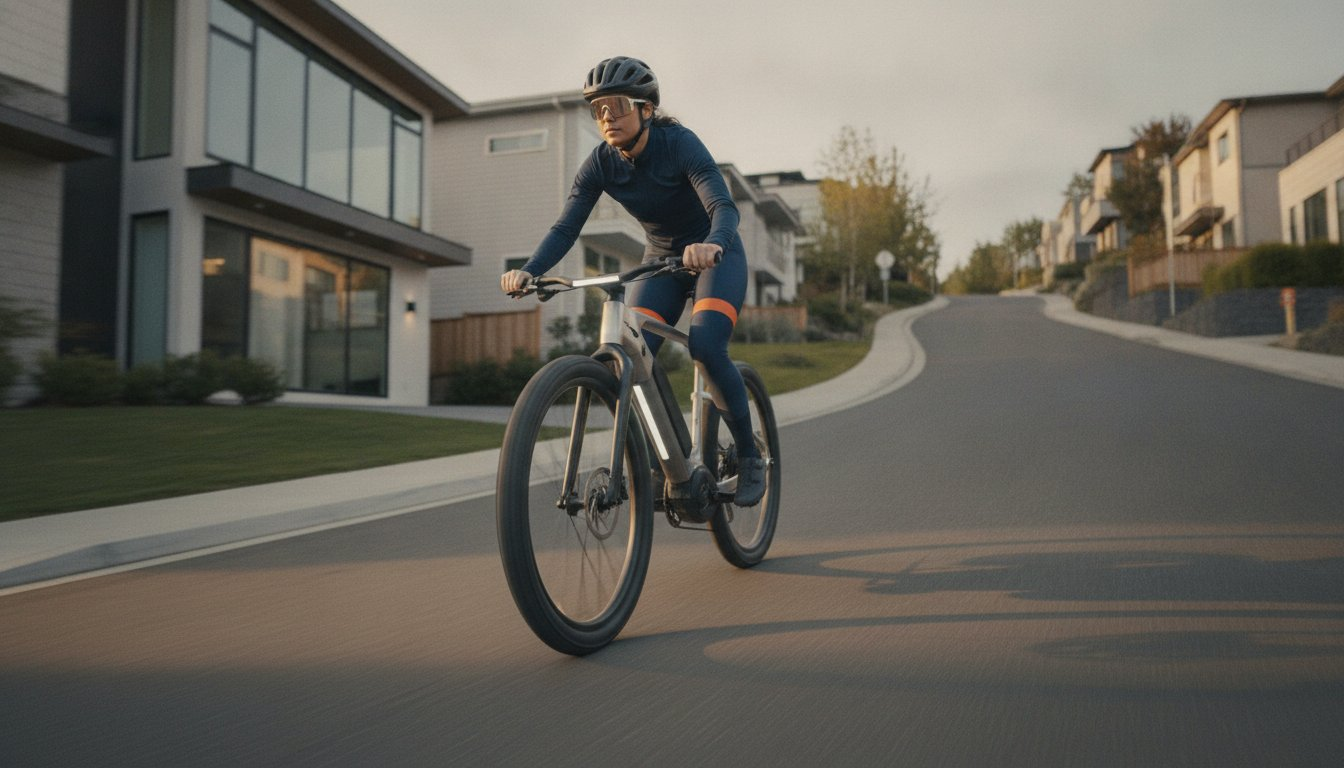
Why are you still pushing your bike up that final 15% grade when you paid for a motor to do the work for you? It’s incredibly frustrating when a motor starts overheating or the battery cuts out just as the incline gets serious. You shouldn’t have to worry about feeling unstable or watching your power fade while you’re halfway up a steep neighborhood climb. Finding a reliable e-bike for hills is about more than just looking at a high wattage number; it’s about understanding how torque and gear ratios work together.
We’ve analyzed the latest 2026 technology to help you master the science of effortless climbing. You’ll learn why 80 to 100 Nm of torque is the sweet spot for steep terrain and how new battery safety certifications like UL 2849 impact your choice. We’ll preview the top configurations for this year, from mid-drive efficiency to high-traction tire setups, so you can reach the summit without breaking a sweat. This guide ensures you choose a ride that’s powerful, legal, and built to handle the toughest elevations with total confidence.
Key Takeaways
- Learn why the torque rating is more critical than wattage when you’re selecting an e-bike for hills.
- Compare mid-drive and hub motor systems to see which drive style fits your specific climbing needs.
- Understand how 4.0-inch fat tires and proper gear ratios create the traction required for steep, loose terrain.
- Use our professional checklist to ensure your next bike meets the 80Nm torque and 720Wh battery standards for 2026.
- Discover why high-torque models like the Himiway Zebra and Mokwheel Obsidian are top choices for conquering high-grade inclines.
Understanding the Physics: Why Torque Matters More Than Watts for Hill Climbing
Torque is the actual muscle behind your ride. While wattage often gets all the marketing attention, it’s the Newton-meters (Nm) that determine if you’ll conquer a steep grade or end up walking. Torque represents the rotational force that actually moves your weight and the bike’s mass up an incline. If you’ve ever felt a motor bog down or groan on a steep street, you’ve experienced a lack of torque; this happens regardless of how many watts the motor claims to have on its sticker.
The “Wattage Trap” is a common pitfall for new riders. Many manufacturers advertise peak power, which is a burst of energy the motor can only sustain for a few seconds. For a long, two-mile climb, you need sustained power. A 500W motor tuned for high torque can easily outperform a 750W motor with low torque when the road tilts upward. This is because torque provides the mechanical leverage needed to keep the wheels turning against gravity’s pull. When you’re shopping for an e-bike for hills, don’t let a high wattage number distract you from the torque rating.
Rider weight and cargo also play massive roles in how much force you need. A 150-pound rider might breeze up a 10% grade with 50Nm of torque, but a 250-pound rider carrying groceries will struggle. Once you hit 15% or 20% grades, the physics change significantly. Without enough rotational force, the motor works harder, generates excess heat, and eventually cuts power to protect its internal components from melting. Choosing a motor with a higher torque ceiling ensures you have a safety margin for these demanding moments.
The Newton-Meter (Nm) Benchmark for Hills
Think of 60Nm as your baseline. This is usually enough for moderate city inclines and rolling terrain. If you live in a truly hilly area with steep residential streets, you should look for 80Nm or higher. You can usually find the real torque rating deep in the manufacturer’s technical spec sheet, even if it isn’t featured in the main headline. High torque is essential for keeping motor heat low during sustained climbs. It allows the system to operate more efficiently without straining the electrical components to their breaking point.
Watts vs. Volts: The Secret to Sustained Power
Modern electric bicycle technology has moved toward 48V and 52V systems for a reason. Higher voltage prevents voltage sag, which is that frustrating feeling of losing power when your battery is under maximum load on a hill. Older 36V batteries often struggle to provide the push needed for heavy inclines. Voltage acts as the pressure pushing energy from your battery to your motor. By choosing a higher voltage system, you ensure that your e-bike for hills has the consistent energy flow required to reach the top without the system stuttering or losing speed as the battery level drops.
Mid-Drive vs. Hub Motors: Which Drive System Wins on Steep Grades?
Choosing between a mid-drive and a hub motor is the most significant decision you’ll make when shopping for an e-bike for hills. These two systems handle inclines in fundamentally different ways. A mid-drive motor sits at the cranks and drives the chain, while a hub motor is built directly into the center of the wheel. The right choice depends entirely on how steep your local hills are and how much maintenance you’re willing to perform. Mid-drives excel in efficiency, but modern geared hub motors have closed the performance gap significantly for most riders.
Maintenance is a major factor in this comparison. Because mid-drives pull on the chain to move the bike, they put significantly more strain on your drivetrain. You’ll likely replace chains and cassettes more frequently than you would with a hub motor system. Hub motors operate independently of the chain. This means if your chain snaps, you can still use the throttle to get home. If you’re looking for a high-performance e-bike for hills that balances power with daily reliability, understanding these trade-offs is essential.
The Case for Mid-Drives in Extreme Terrain
Mid-drive motors are the gold standard for technical mountain trails and grades exceeding 20%. They keep the motor in its optimal RPM range by leveraging the bike’s rear gears. When the hill gets steeper, you simply downshift. This mechanical advantage allows the motor to climb almost any grade without overheating. To protect your equipment, these bikes often include shift sensors. These sensors momentarily cut motor power when you change gears, preventing the high torque from snapping your chain during a heavy climb.
The Evolution of Geared Hub Motors
Modern geared hub motors, like the one found on the Himiway Zebra or the Mokwheel Basalt, are no longer the “weak” option. These systems use internal planetary gears to multiply torque, providing impressive climbing force for most paved and gravel roads. One major advantage is the elimination of “ghost pedaling,” where the motor moves so fast that your legs can’t keep up. Hub motors are also excellent at thermal management. Because the motor is separated from the bike’s gears, it stays cooler during long, steady commutes. For heavy riders or those carrying cargo on 10% to 15% grades, a high-wattage geared hub motor offers a durable, lower-cost solution that requires very little upkeep.
Beyond the Motor: The Role of Fat Tires and Gearing
A powerful motor is only one part of the climbing equation. If your tires can’t find grip or your gears are too high, all that wattage goes to waste. When evaluating an e-bike for hills, you must consider how the bike translates electrical energy into physical traction. Leverage is a key factor here. While 29-inch wheels are great for maintaining speed on flat ground, 26-inch wheels often provide superior climbing ability. The smaller diameter gives the motor a natural mechanical advantage, requiring less force to turn the wheel against a steep incline.
Traction is the second pillar of a successful climb. Wider tires, specifically those 4.0 inches and up, are essential for loose or uneven surfaces. This relies on the “Contact Patch” theory; a wider tire covers more surface area, distributing your weight and the motor’s power more effectively. By lowering your tire pressure slightly, you increase this contact area even further. This allows the rubber to wrap around rocks and roots rather than bouncing over them, which is the difference between reaching the summit and sliding backward.
Fat Tires and Incline Stability
Stability is often overlooked until you’re moving at 6 mph on a 15% grade. All-terrain fat tires prevent “washout,” which is when the front wheel loses grip and slides out from under you on a turn. There’s a significant psychological benefit to a wide-tire platform. It feels planted and secure, allowing you to focus on your line rather than your balance. The Himiway Zebra for sale stands out as a prime example of this design philosophy. Its massive tires and robust frame provide the confidence needed to tackle steep, unpredictable terrain without hesitation.
Mechanical Advantage: Choosing Your Cassette
Your gear ratios act as a force multiplier for your motor. A wide-range cassette, such as an 11-34T setup, is vital for hill starts. The largest cog, the 34T, provides the lowest gear, which is your most important tool when the battery is low or the grade is extreme. While 7-speed systems are common and durable, 8 or 9-speed systems offer smaller jumps between gears, helping you maintain a comfortable pedaling rhythm. Professional assembly and derailleur adjustment are critical. High-torque climbs put immense stress on the chain and cassette. If your indexing is off by even a millimeter, you risk a snapped chain or a missed shift under load, which can be dangerous on a steep incline.

How to Evaluate an E-Bike for Hills: A Buyer’s Checklist
Evaluating an e-bike for hills requires looking beyond glossy marketing photos and top-speed claims. You need a machine built to handle the mechanical stress of gravity. Start with the torque rating; if it isn’t at least 80Nm, you’ll likely struggle on steep residential streets. Next, check the battery capacity. A 720Wh (Watt-hour) battery is the 2026 baseline for hilly terrain. You also need to confirm the controller amperage. A motor is only as good as the controller’s ability to feed it high current during peak load. Finally, look at the geometry. A bike that allows you to keep your weight centered or slightly over the front wheel prevents the front end from lifting or feeling “twitchy” on extreme inclines.
Don’t fall for the trap of buying for speed alone. High speed on flat ground doesn’t translate to climbing power. A true hill-climber prioritizes low-end grunt and thermal stability. If you’re ready to upgrade to a machine that won’t quit halfway up the grade, browse our selection of high-torque e-bikes designed for the toughest terrain.
Hydraulic vs. Mechanical Brakes for Hilly Areas
What goes up must eventually come down. Safety on a descent is just as critical as power on the climb. Mechanical disc brakes often require too much hand force and are prone to brake fade. This happens when the pads lose friction as they overheat on long downhills. Hydraulic disc brakes are non-negotiable for hilly areas. They offer superior modulation and heat dissipation with much less effort. If you’re a heavier rider or carry cargo in a hilly city, look for 203mm rotors instead of the standard 180mm. Larger rotors provide more surface area to shed heat. Remember that performance depends on regular maintenance; learning electric bike brake adjustment ensures your stopping power remains consistent after every heavy ride.
Battery Range and the “Hill Tax”
Climbing incurs a “hill tax” on your battery. Every 500 feet of elevation gain can reduce your expected flat-ground range by several miles. In 2026, 15Ah+ batteries have become the standard for hilly commutes. This capacity provides enough buffer to handle the high energy draw of a steep climb without leaving you stranded. A high-quality Battery Management System (BMS) is also essential. It regulates the flow of electricity and prevents the cells from overheating during the sustained maximum load of a long, grueling ascent. Without a robust BMS, your e-bike for hills might throttle its own power just when you need it most.
Top-Rated E-Bikes for Hills in 2026: The Tartarian Selection
Finding the right e-bike for hills isn’t just about reading a spec sheet; it’s about seeing how those components perform under the pressure of gravity. In 2026, the market has matured to offer specialized machines for every type of incline. The Himiway Zebra remains a dominant force for all-terrain climbing. Its 26-inch fat tires and high-torque motor make it a beast for steep, loose-dirt inclines where traction is everything. If you prefer a more refined, natural riding experience, the Mokwheel Obsidian uses sophisticated torque sensing to deliver power exactly when you push hardest on the pedals. This prevents the “jerkiness” often found in cheaper models when starting on a slope.
For urban riders, the Denago Commute Model 1 offers the agility needed to weave through traffic while maintaining enough efficiency to handle rolling city hills. It’s a lightweight alternative for those who don’t need a massive fat-tire frame. If storage space is an issue, the Heybike Tyson proves that folding convenience doesn’t have to mean sacrificing motor torque. It’s built for the rider who needs to store their bike in an apartment but still has to climb steep bridges or neighborhood grades on their daily route. These models represent the peak of current engineering, balancing battery life with the raw power required for elevation.
Featured Hill Climbers for 2026
The Mokwheel Basalt is a unique contender, combining power station technology with high-torque hub performance. It’s ideal for long-distance adventurers who need to charge devices at the summit. For those seeking a budget-friendly option, the Heybike Mars provides a reliable entry point for moderate inclines and weekend path riding. When comparing the Himiway Cruiser vs. Zebra, the Zebra is generally the superior choice for heavier riders or more extreme grades. Its upgraded motor and battery capacity provide the extra headroom needed to ensure the motor doesn’t overheat during a long, grueling ascent.
The Tartarian Advantage: Safety and Assembly
Your bike’s performance on a 15% grade depends heavily on how it was put together. A poorly indexed derailleur or a loose crank arm can lead to catastrophic drivetrain failure under the immense stress of a high-torque climb. This is why professional e-bike assembly is non-negotiable for hill riders. At Tartarian E-bikes, our multi-point safety inspection involves checking the specific torque values on every bolt to ensure nothing slips when you’re under load. We also provide on-site maintenance to keep your hill-climber in peak condition for years. This level of care ensures your e-bike for hills remains a reliable tool rather than a safety risk. Ready to conquer your commute? Find your perfect hill-climbing e-bike at Tartarian E-bikes today!
Take Control of Every Incline
Mastering the steepest roads in your neighborhood doesn’t require a miracle; it requires the right equipment. You’ve learned that choosing an e-bike for hills is a balance of high torque, reliable battery management, and the mechanical advantage of proper gearing. Whether you opt for the raw power of a Himiway Zebra or the intuitive sensing of a Mokwheel Obsidian, the goal is consistent performance without the fear of overheating or power loss. The right configuration ensures you reach the top with energy to spare.
At Tartarian E-bikes, we take your safety and performance personally. We’re an authorized dealer for Himiway, Mokwheel, and Denago, but we go beyond just selling bikes. Every model includes professional assembly and a comprehensive safety inspection because we know the stress that steep inclines put on your drivetrain. Don’t let a difficult grade dictate where you can go. You deserve a ride that’s as ambitious as your route. Browse our collection of high-torque e-bikes built for hills and start your next adventure with total confidence.
Frequently Asked Questions
Do I need a mid-drive motor to climb steep hills?
You don’t strictly need a mid-drive motor for most residential or paved inclines. High-torque geared hub motors are more than capable of handling typical road grades. However, if you’re tackling technical off-road trails or sustained slopes steeper than 20%, a mid-drive system’s ability to use the bike’s gears offers a significant efficiency advantage for the motor.
How much torque (Nm) is enough for a 15% grade?
Aim for a minimum of 80Nm of torque for a 15% grade. This level of rotational force ensures the motor can maintain momentum without straining its internal components. While lower torque ratings might eventually get you to the top, you’ll likely experience significant speed drops and increased motor heat, which can lead to premature wear over time.
Will climbing hills damage my e-bike motor or battery?
What is the best gear to be in when starting a hill climb?
Start your climb in the lowest gear available, which is the largest cog on your rear cassette. This provides the maximum mechanical advantage, allowing the motor to reach its optimal RPM more quickly. Starting in a high gear forces the motor to work much harder at a lower efficiency, which drains the battery faster and generates unnecessary heat.
Can I add a second battery to help with long uphill commutes?
You can often add a second battery if your frame and controller support a dual-battery configuration. Since climbing acts as a “hill tax” on your energy reserves, a second battery is a smart investment for long commutes with significant elevation changes. This ensures your e-bike for hills has enough voltage to maintain peak torque throughout the entire journey without experiencing power sag.
Why do hydraulic brakes matter more in hilly areas?
Hydraulic brakes are essential because they offer superior heat dissipation and much stronger stopping power with minimal hand effort. On long descents, mechanical brakes can suffer from brake fade, where the pads lose their grip due to extreme heat. Hydraulic systems use fluid that doesn’t compress, ensuring your braking performance remains consistent even during the most demanding downhill sections.
Does rider weight affect an e-bike’s ability to climb?
Rider weight directly impacts climbing performance because the motor must work harder to overcome gravity. A heavier rider or a bike loaded with cargo will require a higher torque rating to maintain a steady speed on steep grades. If you’re on the heavier side, prioritizing a motor with at least 80 to 90Nm of torque ensures you won’t be forced to push the bike up the steepest sections.
How do fat tires help with uphill traction?
Fat tires improve traction by creating a larger contact patch with the ground. This extra surface area is vital when you’re applying high torque on loose gravel or wet pavement. By distributing the motor’s power over a wider area, the tires are much less likely to spin out, giving you the stable platform needed to maintain your momentum until you reach the top.