
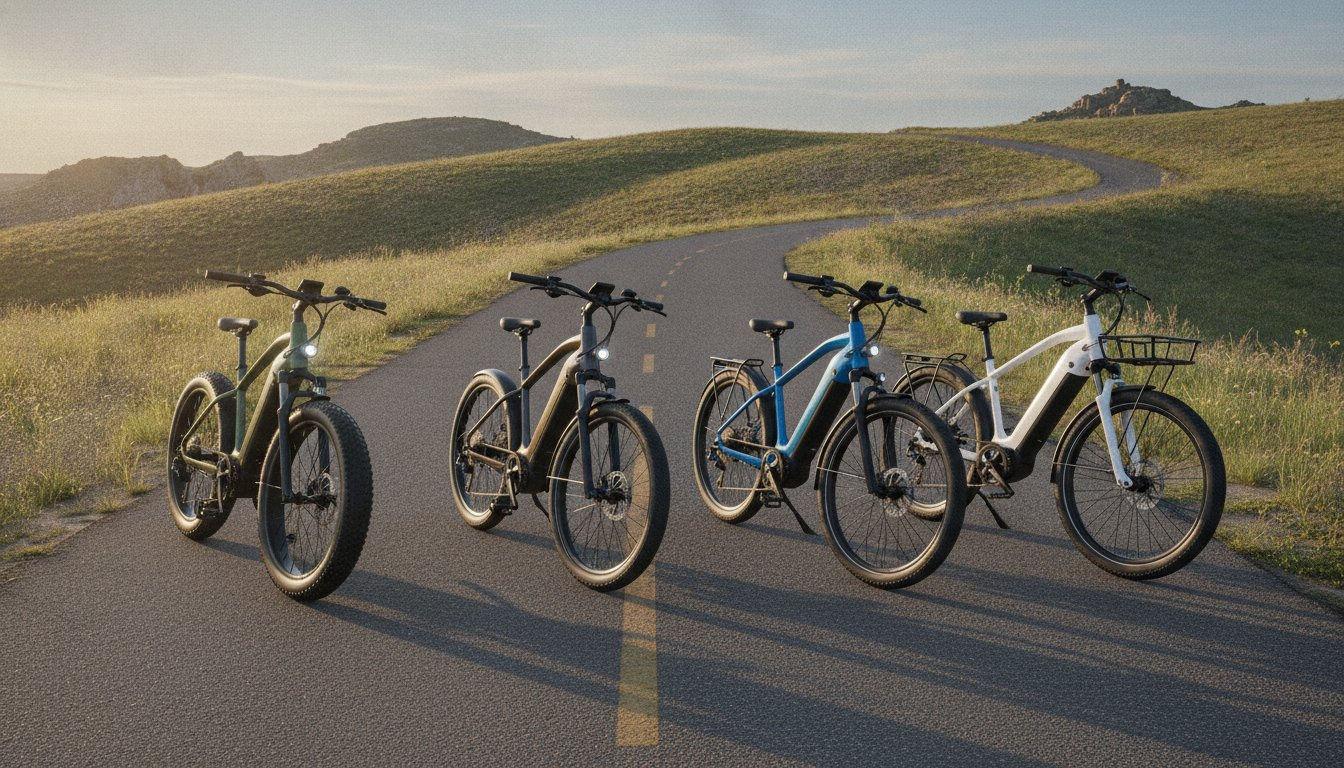
Why does a battery that looks massive on paper often leave you pedaling a heavy frame home without power? It’s a common frustration for riders who realize that “ideal condition” manufacturer estimates rarely survive a hilly commute or a windy afternoon. If you’ve been searching for an honest electric bike range comparison, you’re likely tired of decoding confusing Watt-hour ratings and feeling that nagging range anxiety. We understand that transparency matters more than a flashy brochure when you’re investing in your daily mobility.
This guide moves past the marketing fluff to reveal how Himiway, Mokwheel, Denago, and Heybike perform in the real world. Whether you’re looking at the 80-mile capability of the Himiway Zebra or the solar-ready Mokwheel Basalt 2.0, you deserve to know exactly how far you can go before the motor cuts out. You’ll discover how battery capacity translates to actual distance and learn about the new 2026 safety certifications that affect your purchase. We’ll provide a clear side-by-side view of the top models and professional tips to extend your battery life, ensuring your next adventure doesn’t end prematurely.
Key Takeaways
- Learn why manufacturer range estimates often differ from real-world performance and how to accurately calculate your own expected mileage.
- Explore our 2026 electric bike range comparison to see how flagship models from Himiway, Mokwheel, Denago, and Heybike perform side-by-side.
- Understand how external variables like rider weight and steep terrain can drain your battery up to three times faster than standard flat-road cruising.
- Discover practical habits, such as managing tire pressure and Pedal Assist levels, to significantly extend your total ride time per charge.
- Find out why professional assembly and safety inspections are essential for ensuring your e-bike battery remains efficient and safe for long-term use.
Understanding E-Bike Range: Why Manufacturer Estimates Vary
Manufacturer range estimates aren’t lies, but they often represent a reality you’ll never actually encounter. When you perform an electric bike range comparison, you’ll quickly notice that the numbers on the box rarely match the numbers on your odometer after a week of riding. This happens because brands define range based on laboratory settings rather than the stop-and-go nature of a daily commute. Real-world range is the distance your bike covers under average conditions: moderate wind, occasional hills, and a mix of pedal assist levels.
The “Marketing vs. Reality” gap is a significant hurdle for new riders. A brand might claim a 60-mile range, but if you’re using a heavy throttle or climbing steep grades, that number can easily drop to 35 miles. To cut through the noise, look at the battery’s capacity rather than the advertised mileage. Watt-hours are calculated by multiplying battery voltage by Amp-hours, representing the total energy reservoir available. This is the most reliable metric for comparing two different bikes. Efficiency also depends on the motor; hub motors are common and reliable for flat ground, while mid-drive motors often use energy more effectively by leveraging the bike’s existing gears.
The “Ideal Conditions” Myth
Manufacturers typically test their bikes under “ideal conditions” to reach those high mileage numbers. This usually involves a 150lb rider pedaling on perfectly flat ground with no wind at the lowest possible assist level. It’s a controlled environment that doesn’t account for typical US riding scenarios. Most riders carry cargo, face head-on winds, or deal with frequent red lights that require high energy to restart. Several factors that affect e-bike range, such as tire pressure and mechanical friction, are also optimized in these tests to produce the best possible result.
Range Anxiety and How to Beat It
Range anxiety is the genuine fear that your battery will die before you reach your destination, leaving you to pedal a heavy e-bike home manually. It’s a common concern that can ruin the enjoyment of a long ride. To beat it, we recommend the “20% Rule.” Always buy a bike with 20% more range than you think you need. This buffer accounts for battery degradation over time and unexpected detours. Your bike’s Battery Management System (BMS) plays a vital role here; it acts as a digital brain that protects the cells from over-discharging, ensuring your battery remains healthy and predictable for years to come.
The Science of Mileage: What Actually Drains Your Battery?
Physics doesn’t take days off. When you look at an electric bike range comparison, it’s easy to focus on the battery size, but the environment you ride in dictates how that energy is spent. Every extra pound of cargo or rider weight requires more torque to move. If you’re hauling groceries or a heavy backpack, your motor works harder to maintain speed, which pulls more current from the cells. This is why a lightweight commuter bike often outlasts a heavy cargo bike with the same battery capacity.
Terrain is the single biggest “battery killer” you’ll encounter. Climbing steep hills can drain a battery three times faster than riding on flat pavement. While some high-end systems claim a practical range of around 80 miles, achieving that distance usually requires staying on level ground. Weather also plays a massive role. Lithium-ion batteries rely on chemical reactions that slow down in the cold. If you’re riding in temperatures below 40°F, expect your total mileage to drop by 20% or more as internal resistance increases.
Tire pressure and tread design are often overlooked. Large fat tires, like those found on the Himiway Zebra, offer incredible stability and comfort, but they have a wider contact patch. This creates more rolling resistance. If your tires are even slightly under-inflated, the motor has to fight against that “squish” with every rotation. Keeping your PSI at the top of the recommended range is one of the easiest ways to protect your mileage.
Aerodynamics and Rider Input
Wind resistance becomes your primary opponent once you exceed 15 mph. At higher speeds, the motor spends most of its energy simply pushing through the air. Your choice between “Throttle Only” and “Pedal Assist Level 1” also changes everything. Using the throttle is convenient, but it’s the least efficient way to ride. Smooth, consistent pedaling allows the motor to stay in its efficiency sweet spot, whereas erratic bursts of speed force the battery to work much harder to overcome inertia.
Mechanical Efficiency and Drag
Hidden mechanical issues can steal miles from your trip without you realizing it. A rubbing brake pad or a dry, unlubricated chain creates constant friction that the battery must overcome. This is why professional e-bike assembly matters for safety and efficiency. When a bike is tuned correctly, every watt of power goes toward forward motion rather than fighting against poorly adjusted components. To ensure your ride is performing at its peak, consider scheduling a professional safety inspection to catch these silent range-killers before your next long trip.
2026 E-Bike Range Comparison: Brand vs. Brand
The 2026 e-bike market has reached a point where motor wattage is only half the story. To get a clear electric bike range comparison, we have to look at how different brands balance battery capacity with their specific use cases. Some manufacturers prioritize raw power for trail riding; others focus on lightweight efficiency for the daily urban grind. A 750W motor on a heavy fat-tire bike like the Himiway Cruiser will consume energy far differently than the 500W motor found on a Denago City Model 1. Understanding these nuances is the key to finding a ride that won’t leave you stranded miles from home.
Energy management starts with the battery cells themselves. When you’re Understanding E-bike Batteries, it’s vital to look at the total Watt-hours (Wh) rather than just the Amp-hour rating. This number represents the total energy reservoir. For example, the Himiway Zebra and Cruiser are designed for off-road reliability and long-distance hauls, using high-capacity batteries to overcome the rolling resistance of their large tires. Meanwhile, the Denago Commute Model 1 provides a real-world range of 30 to 40 miles by using a more conservative motor that sips power rather than gulping it.
Himiway vs. Mokwheel: The Heavyweights
Himiway and Mokwheel are currently locked in a battle for the long-range crown. The Himiway Zebra is a standout with its 960Wh battery, which provides enough energy to reach an 80-mile range under the right conditions. It’s built for those who need robust, long-range fat tire performance on unpredictable terrain. Mokwheel counters this with the Basalt 2.0, which features an 1100W peak motor and solar charging capabilities. If you’re looking for specialized performance, the Mokwheel Obsidian uses a 1300W mid-drive motor. Mid-drives are often more efficient on hills because they leverage the bike’s mechanical gears, though the Obsidian’s high power output means you’ll still need to manage your assist levels to hit that 80-mile mark.
Denago vs. Heybike: Urban Efficiency and Portability
For city dwellers, the best bike isn’t always the one with the biggest battery; it’s the one with the best “miles per pound.” The Denago City Model 1 excels here, offering a streamlined battery-to-weight ratio that makes it easy to handle in traffic while still providing a 40-mile range. Heybike takes a different approach by focusing on portability. The Heybike Mars 2.0 is a folding model that still manages a 45-mile range with its 750W motor. While the Heybike Tyson offers similar folding convenience, these smaller frames often have less room for massive battery packs. If your commute involves carrying your bike up stairs or onto a train, the Denago’s balanced weight or Heybike’s folding capability might be more valuable than the triple-digit range of a heavier trail bike.

Maximizing Your Range: 5 Practical Tips for Riders
Technical specs provide the foundation, but your daily habits determine the final results. While our electric bike range comparison showed how different batteries perform, the way you interact with your machine can add or subtract ten miles from your trip. You don’t need a degree in electrical engineering to get more out of your battery; you just need to understand how to reduce the load on your motor. Efficiency is about minimizing friction and managing power delivery intelligently.
Follow these five practical steps to protect your mileage:
- Optimize Pedal Assist levels: Don’t treat the throttle like an “on” switch. Start your ride in a low PAS setting and only increase the assistance when you hit a headwind or a steep incline.
- Maintain proper tire pressure: Check your PSI weekly. Under-inflated tires create a larger contact patch, which increases rolling resistance and forces the battery to work harder to maintain speed.
- Manage your gear shifts: Treat your e-bike like a manual car. Shift to a lower gear before you come to a complete stop. This allows you to start moving again with less motor torque, saving significant energy during stop-and-go traffic.
- Keep your drivetrain clean: A dirty, gritty chain is a silent range killer. Friction is the enemy. Regular cleaning and lubrication ensure that the motor’s energy isn’t wasted fighting against a stiff drivetrain.
- Charge smartly: Avoid the temptation to run your battery down to 0%. Lithium-ion cells prefer shallow discharge cycles rather than being pushed to their absolute limits.
The Power of the 80/20 Rule
Battery longevity and daily range are closely linked. To double the total lifespan of your battery, try to keep the charge level between 20% and 80% for your regular commutes. Storing an e-bike battery in temperatures between 50°F and 70°F preserves its chemical stability and maximum range potential. While you should avoid keeping it at 100% for weeks at a time, you still need to perform a “balance charge” occasionally. Once a month, charge the battery to a full 100% and leave it on the charger for an extra hour to ensure all internal cells are at equal voltage.
Tire Care and Range
Your tires are the only point of contact between your bike and the road. If the tread is worn or the rubber is degrading, your efficiency will plummet regardless of your battery size. This is why essential E-bike tire and tube replacement for range maintenance is a critical part of your service schedule. Choosing the right tread pattern for your typical surface also matters; knobby off-road tires provide great grip in dirt but create unnecessary drag on smooth pavement. If you notice your range dropping unexpectedly, it’s time for a professional safety inspection to ensure your mechanical components aren’t stealing your power.
Find Your Perfect Long-Range E-Bike at Tartarian E-bikes
Choosing the right model from an electric bike range comparison is a great first step, but where you buy that bike is just as important. A premium retailer like Tartarian E-bikes ensures you receive a product with an authentic, certified battery and a manufacturer-backed warranty. You won’t have to worry about gray-market cells or “mystery” components that fail after a few months. We believe in transparency because we know that a reliable commute depends on the integrity of your power source.
Every bike we sell undergoes a rigorous safety inspection before it ever reaches your hands. We stock the industry’s most trusted names, including the high-capacity Himiway Zebra for your off-road adventures and the efficient Denago City Model 1 for your daily urban routes. If you’re still undecided, we invite you to visit our test ride facility. There’s no substitute for feeling the motor’s torque and seeing the battery’s performance on a real path. Our experts are on hand to help you translate technical specs into a ride that fits your lifestyle.
Professional Assembly for Peak Performance
Most people don’t realize that poor assembly is a leading cause of reduced mileage. If your brake pads rub even slightly or your gears aren’t perfectly aligned, your motor has to work overtime to overcome that internal resistance. Our professional assembly service eliminates this mechanical drag from day one. We perform a multi-point inspection to ensure your drivetrain is as efficient as possible. Beyond the initial setup, our on-site maintenance services help keep your range high over the years, preventing the small friction issues that slowly steal your battery’s potential.
Ready to Ride?
The 2026 market for e-mobility is more exciting than ever. Brands like Himiway, Mokwheel, Denago, and Heybike have set new standards for what riders should expect from their equipment. This electric bike range comparison proves that battery size is only part of the story; mechanical health and expert support are what keep you on the road. Whether you need a folding commuter or a long-range fat tire beast, we have the expertise to match you with the right frame. Don’t leave your range to chance or optimistic marketing claims.
Shop our long-range e-bike collection today and experience the difference that expert preparation makes. Browse our full selection of e-bikes, e-trikes, and e-scooters to find your perfect match.
Take Command of Your 2026 E-Bike Journey
Your journey shouldn’t be limited by a flickering battery gauge. This electric bike range comparison has shown that true mileage is a combination of high-quality engineering and smart riding habits. Whether you choose the rugged power of a Himiway Zebra or the streamlined efficiency of a Denago City Model 1, the key is understanding how terrain, weight, and mechanical health impact your ride. Range is a calculation of efficiency, and your choice of brand should reflect your specific terrain and cargo needs.
At Tartarian E-bikes, we don’t just sell you a frame; we ensure it’s ready for the long haul. As an authorized dealer for Himiway, Mokwheel, Denago, and Heybike, we provide professional assembly and safety inspections on every bike to eliminate range-killing friction before you ever hit the road. Our expert maintenance and repair services are always available to keep your drivetrain running at peak efficiency for years to come. Don’t let range anxiety hold back your next adventure. With the right bike and professional support, you can ride with total confidence. Explore our premium long-range e-bikes and find the perfect partner for your daily commute or weekend exploration.
Frequently Asked Questions
How far can an e-bike go on one charge in 2026?
Most modern e-bikes cover between 30 and 60 miles on a single charge, though premium 2026 models frequently exceed 80 miles. For instance, the Himiway Zebra is designed to hit that 80-mile mark under proper conditions. Your actual distance depends on the battery’s Watt-hour capacity and how much assistance you request from the motor during your ride.
Does rider weight really affect e-bike range?
Yes, rider weight has a direct impact on how far you can travel. Moving a heavier load requires more torque and energy from the motor, which drains the battery faster. If you’re carrying heavy cargo or are a larger rider, you might see a significant reduction in range compared to the manufacturer’s “ideal” test rider, who usually weighs around 150 lbs.
How long does an e-bike battery last before it needs replacing?
Most lithium-ion e-bike batteries last between 3 to 5 years or roughly 500 to 1,000 full charge cycles. After this point, the battery won’t stop working, but its capacity will likely drop to about 80% of its original strength. You can extend this lifespan by following the 80/20 charging rule and storing your battery in a climate-controlled environment.
Can I increase my e-bike range with a second battery?
Adding a second battery is one of the most effective ways to double your potential distance. Some 2026 models, like the Heybike Saturn, even offer dual-battery options that can reach up to 90 miles. Carrying a spare battery in a rack bag is a popular solution for long-distance adventurers who want to eliminate range anxiety on all-day trips.
Why is my e-bike range shorter in the winter?
Cold temperatures slow down the chemical reactions inside lithium-ion batteries, which increases internal resistance. When the thermometer drops below 40°F, you can expect a range reduction of 20% or more. To minimize this effect, always store and charge your battery indoors and only mount it to the bike right before you’re ready to start your commute.
Is it better to use the throttle or pedal assist for more range?
Pedal assist is significantly more efficient than using the throttle alone. When you pedal, you’re providing a portion of the kinetic energy, which allows the motor to use less current from the battery. In an electric bike range comparison, riders using low-level pedal assist consistently travel much further than those relying solely on the throttle for movement.
What is the best e-bike brand for long-distance commuting?
Himiway and Mokwheel are currently the leaders for long-distance reliability. The Himiway Zebra offers a massive 960Wh battery for extended trips, while the Mokwheel Basalt provides an 80-mile range with solar charging compatibility. For urban commuters who prioritize efficiency over raw power, the Denago Commute Model 1 offers a balanced 40-mile real-world range in a lighter, more maneuverable package.
Does professional assembly really improve battery range?
Professional assembly directly improves your range by eliminating mechanical drag. If your brakes rub or your chain is misaligned, the motor has to fight that friction, wasting energy that should go toward forward motion. Expert technicians ensure your drivetrain is perfectly tuned, which can save you several miles per charge compared to a poorly adjusted, home-assembled bike.