
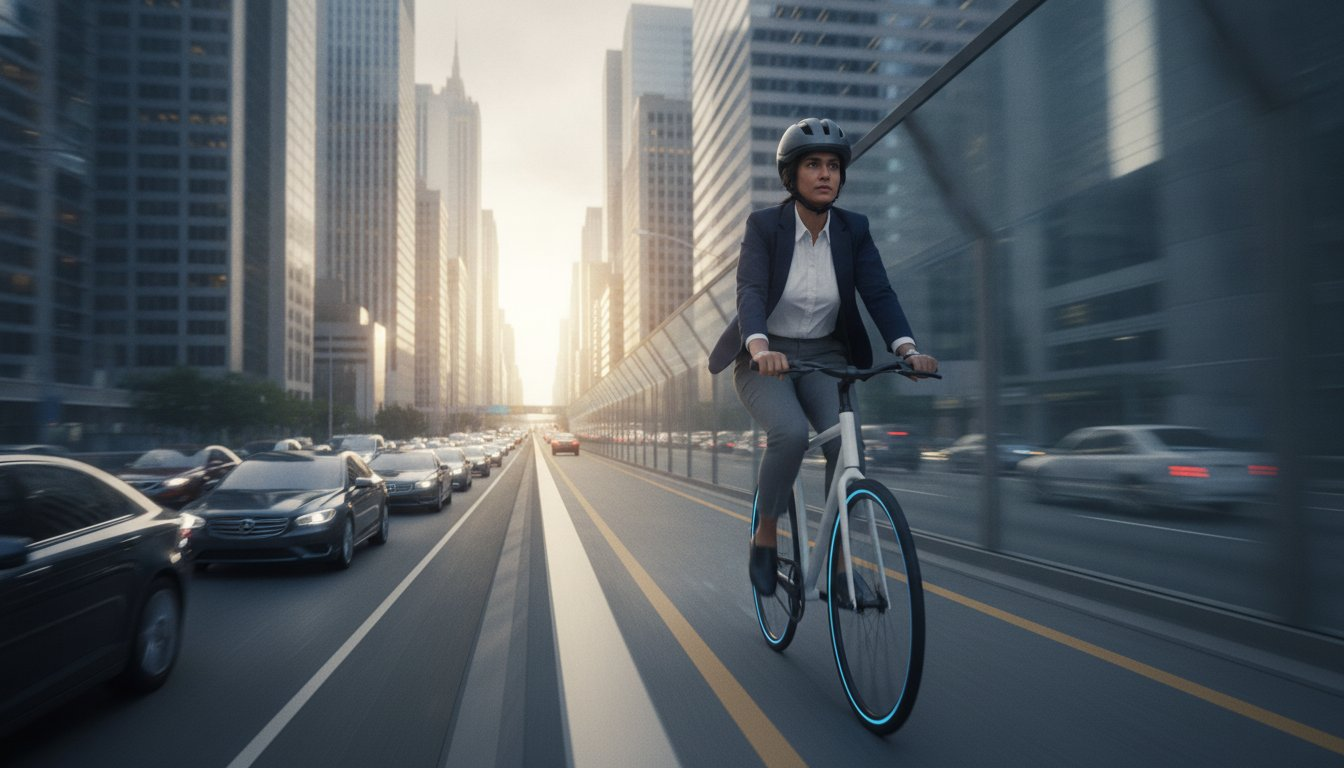
The fastest way to cross town during rush hour isn’t a 300-horsepower engine; it’s a 750-watt motor. While most commuters assume a car is the only viable way to manage a busy schedule, the reality of 2026 urban mobility tells a different story. You’re likely tired of the relentless cycle of gridlock, skyrocketing gas prices, and the $2,496 average annual insurance bill. It’s frustrating to watch your morning energy evaporate while searching for a $500-a-month parking spot in a vehicle that costs over $12,000 a year just to keep on the road. You deserve a predictable morning that doesn’t start with road rage and sedentary stress.
This guide will show you how a detailed electric bike vs car commute comparison favors the two-wheeler for your wallet, your schedule, and your mental health. We’ll prove that switching to an e-bike can slash your transportation expenses to less than one cent per mile in electricity while giving you back hours of lost time. We’ll break down the latest 2026 ownership data, the proposed 30% federal tax credit, and the practical reality of arriving at work energized instead of exhausted. It’s time to stop surviving your commute and start owning your morning.
Key Takeaways
- Learn why “door-to-door” efficiency matters more than engine speed and how legal filtering allows e-bikes to bypass city gridlock.
- Analyze the long-term ROI of an electric bike vs car commute to see how you can slash your monthly expenses on fuel, insurance, and parking.
- Discover how integrating low-impact cardio into your morning routine boosts mental clarity and eliminates the cortisol spikes caused by road rage.
- Identify the essential cargo racks and weatherproofing gear that make commuting practical for grocery runs and laptop transport in any season.
- Follow a professional 5-step plan to transition safely, from selecting the right frame geometry to ensuring your new ride has a certified safety inspection.
Beyond Top Speed: Why E-Bikes Often Beat Cars in the City
Speed is a vanity metric. While a car’s speedometer might promise 120 mph, the average velocity in major city centers rarely breaks 15 mph during peak hours. When you analyze an electric bike vs car commute, the winner isn’t determined by maximum engine power, but by door-to-door efficiency. A car is often a prisoner of the grid. It’s bound by the movements of the vehicle in front of it, trapped in a sequence of red lights and bottlenecks that negate its theoretical speed advantage. An e-bike operates on a different logic of movement.
The predictability of an e-bike is its greatest asset. If your ride takes 22 minutes today, it will almost certainly take 22 minutes tomorrow. You aren’t at the mercy of a minor fender bender three miles ahead or a sudden construction zone that adds 30 minutes to a driver’s morning. By utilizing legal filtering and dedicated cycling infrastructure, e-bike riders bypass the static queues that define modern driving. This autonomy allows you to reclaim control over your schedule, replacing “estimated arrival times” with guaranteed ones.
The Urban Bottleneck Reality
Stop-and-go traffic is where the traditional commute fails most spectacularly. Cars spend a significant portion of their journey idling, consuming time while making zero progress. E-bikes maintain a higher average speed because they don’t get stuck in the “accordion effect” of traffic waves. You can consult an Electric bicycle overview to see how different motor classes provide the torque needed to keep you moving through these zones without physical exhaustion. While drivers wait for three light cycles to clear a single intersection, an e-bike rider has already moved on to the next mile. The freedom of bike-only paths and urban shortcuts often cuts significant distance off the route, further widening the efficiency gap.
Eliminating the “Parking Tax”
Parking is the hidden time-thief of the car commute. Drivers often celebrate a “20-minute drive” but conveniently forget the ten minutes spent circling a multi-story garage and the five-minute walk from the parking structure to the office door. This “parking tax” can add hours of wasted time to your month. E-bikes eliminate this friction entirely. Consider the advantages of direct access:
- Proximity: Park within feet of your destination entrance rather than blocks away.
- Security: Use high-quality e-bike locks and smart security systems to keep your ride safe in high-visibility areas.
- Cost: Avoid the $500 to $600 monthly parking fees common in cities like San Francisco or New York.
Bringing your vehicle closer to your destination doesn’t just save time; it provides peace of mind. Models like the Denago Commute Model 1 or the Mokwheel Basalt are designed specifically to handle these urban environments, offering the stability and security features needed for daily professional use. You aren’t just changing your vehicle; you’re optimizing every minute of your morning.
The Financial Breakdown: E-Bike ROI vs. Car Depreciation
Owning a car is a constant financial leak. While most people only look at the monthly loan payment, the true cost of an electric bike vs car commute involves a deeper calculation of depreciation and overhead. In 2026, the average annual cost to own and operate a new car has climbed past $12,000. By contrast, a high-quality e-bike typically costs between $800 and $1,200 per year to maintain and power. You aren’t just saving pennies at the pump; you’re opting out of a system designed to devalue your assets. While gas powered cars cost 10 to 30 cents per mile in fuel, an e-bike costs less than 1 cent per mile in electricity, making it the most cost effective motorized transport available.
Year One: Calculating Your Break-Even Point
The upfront investment for a Denago Commute Model 1 or a similar mid-range model is often less than the down payment on a new vehicle. When you eliminate $500 monthly parking fees and daily tolls, the math shifts rapidly in your favor. Your savings are further amplified by the proposed federal tax credit, which offers a 30% refundable credit on new e-bikes priced under $8,000. For a commuter traveling 20 miles per day, an e-bike pays for itself in fuel and parking savings alone within the first eight months of ownership. If you want to see the full breakdown of how these numbers stack up across every expense category, our detailed guide on how to save money commuting with an e-bike walks through the hard data comparing the $11,000 annual cost of car ownership against the true cost of two-wheeled travel. This rapid return on investment is supported by research on e-bike benefits, which highlights how these vehicles consistently replace high-cost car journeys for urban residents.
The Mental Load of Ownership
Cars carry a heavy administrative burden that e-bikes simply don’t have. You don’t have to worry about emissions testing, complex registration renewals, or the anxiety of a “Check Engine” light that could cost thousands to fix. While car insurance premiums are projected to average $2,496 per year in 2026, e-bike insurance is significantly more affordable and often optional depending on your local regulations. This simplicity reduces the mental load of your daily transport, allowing you to focus on your destination rather than your vehicle’s paperwork.
Maintenance cycles are also far simpler. A car requires oil changes, brake pads, and tire rotations that average $500 to $1,500 annually. An e-bike typically requires just $100 to $300 in routine upkeep to stay in peak condition. Key maintenance areas for e-bikes include:
- Regular brake adjustments and pad replacement.
- Tire pressure checks and tube replacements.
- Chain lubrication and drivetrain cleaning.
Even depreciation favors the bike. A new car loses 12.5% of its value the moment you drive it off the lot. E-bikes tend to hold their value better relative to their initial price point because they don’t rely on complex internal combustion components that wear out over time. If you want to maximize this longevity, consider using professional assembly services to ensure every component is calibrated for long-term durability from day one.
Health and Environment: The Invisible Benefits of the Switch
Your physiology responds differently to an open bike path than it does to a congested highway. While a car commute is essentially a period of forced inactivity, an e-bike turns your travel time into a low-impact cardio session. You arrive at your desk with your heart rate slightly elevated and your mind fully awake. This isn’t just about fitness; it’s about cognitive priming. This shift in physical activity is a core finding in research on e-bike travel behavior, which documents how users often replace sedentary car trips with active, motorized cycling that improves overall well-being.
Road rage is a biological response to a lack of control. When you’re trapped in a car, every delay feels like a personal affront. On an e-bike, you have the autonomy to move. The cortisol spikes associated with gridlock are replaced by the endorphin release of physical movement. This mental transition is a primary reason why the electric bike vs car commute debate is increasingly won by those prioritizing their mental health. You don’t just get to work; you arrive “primed” for productivity instead of recovering from the stress of the road.
The environmental disparity is staggering. A typical passenger vehicle emits about 4.6 metric tons of carbon dioxide every year. E-bikes emit roughly 90-95% less CO2 equivalent per kilometer than cars over their entire lifecycle. By choosing a ride like the Himiway Zebra or Mokwheel Obsidian, you’re directly reducing the carbon footprint of your household while contributing to quieter, cleaner urban centers.
The “No-Sweat” Commute Myth
Modern e-bikes have solved the “sweaty office” problem. Class 2 and Class 3 pedal assist systems allow you to regulate your body temperature through precise motor power selection. If you’re facing a steep incline or a headwind, you can increase the assistance to maintain your speed without increasing your physical effort. This makes e-bikes the “great equalizer” for riders of different fitness levels. You can commute in professional attire and arrive looking as fresh as if you had driven, thanks to the cooling effect of the wind and the efficiency of the motor.
Sustainable Urban Transportation
E-bikes represent a surgical approach to mobility. They cause negligible road wear compared to two-ton vehicles, which helps reduce the long-term maintenance costs of city infrastructure. While battery manufacturing does have an impact, it’s a fraction of the resources required to build and maintain an internal combustion engine over its lifespan. E-bikes also play a critical role in reducing urban noise pollution. Replacing a rumbling engine with a near-silent electric motor creates a more livable environment for everyone in the community. You’re not just changing your ride; you’re helping build a more sustainable city.

Overcoming Common Commuting Objections
Practicality is the final hurdle for most people considering the switch. While the financial and health benefits are clear, questions about rain, safety, and cargo often linger. Transitioning from an electric bike vs car commute requires a shift in gear, not just a shift in mindset. With the right accessories, an e-bike handles 90% of daily tasks just as effectively as a sedan, often with less stress. Modern weatherproofing technology and cargo solutions have turned these perceived weaknesses into manageable logistics.
Weather is rarely the dealbreaker people imagine it to be. High-quality fenders and waterproof apparel allow you to arrive dry even in persistent rain. During summer months, the motor does the heavy lifting so you don’t arrive overheated. For extreme cold, winter-specific tires and heated gloves provide the same reliability you expect from a vehicle. Security is also a solvable problem. A multi-layered strategy using a heavy-duty U-lock combined with a secondary chain and an alarm system provides the urban peace of mind necessary for professional commuting.
Carrying Your Life: Racks and Bags
Utility defines the success of your commute. An electric bike rear rack is the most important accessory you can own. It shifts the weight of your laptop, gym clothes, and groceries from your spine to the frame of the bike. This lower center of gravity improves handling and prevents the “sweaty back” syndrome common with backpacks. For those carrying heavier loads or navigating rougher terrain, the Himiway Zebra offers the structural integrity needed to transport up to 400 pounds without compromising stability. Using waterproof panniers ensures your electronics stay protected regardless of the forecast.
Safety in Traffic
Riding in a city requires a proactive approach to safety. Route planning is your first line of defense; choosing quiet side streets or dedicated bike paths is always superior to fighting for space on main arterials. You should also invest in high-visibility lighting and one of the electric bike helmets designed specifically for the higher speeds of Class 3 e-bikes. Defensive riding techniques, such as maintaining a “buffer zone” and making eye contact with drivers, ensure you remain predictable and visible in the modern urban environment.
Many commuters are also discovering the power of “hybrid commuting.” This involves using a foldable model like the Heybike Mars to cover the “first and last mile” of a trip while using public transit for the long-haul middle section. This flexibility allows you to bypass the most congested parts of a city without the need for a car at either end. If you’re ready to build your ideal setup, explore our full range of commuter-ready e-bikes and accessories to find the perfect fit for your lifestyle.
Making the Transition: Your 5-Step Implementation Plan
Transitioning from an electric bike vs car commute doesn’t have to be a leap of faith. It’s a strategic shift that works best when approached with professional guidance and a clear roadmap. Most commuters fail because they try to do too much too soon or skip the critical setup phase. By following a structured implementation plan, you can ensure your new routine is sustainable, safe, and significantly more enjoyable than sitting in a traffic jam.
- Test ride for geometry: Don’t buy based on specs alone. Visit a specialist to find a frame that fits your reach and stand-over height. A bike that feels natural is a bike you’ll actually use.
- Prioritize professional setup: Avoid the “bike-in-a-box” pitfalls. Having an expert handle the initial build ensures your drivetrain is indexed and your brakes are properly bedded for urban safety.
- Perform a weekend dry run: Test your route on a Sunday morning. This allows you to find the best bike paths and shortcuts without the pressure of a 9:00 AM meeting.
- Establish a maintenance rhythm: Treat your e-bike like the vehicle it is. Check your tire pressure weekly and schedule a professional safety inspection every 500 miles to maintain peak performance.
- Scale your commitment: Start by commuting two days a week. Once your gear and route feel familiar, you’ll find it’s easier to move toward a full-time electric bike vs car commute lifestyle.
Selecting the Right Commuter Model
Your choice of hardware depends on your specific urban environment. The Denago City Model 1 is an excellent choice for those seeking an upright, comfortable position for traditional city streets. If your commute involves a train connection or limited office storage, folding options like the Heybike Mars offer the necessary flexibility without sacrificing motor power. Always match your battery range to your round-trip distance, leaving a 20% buffer for head-winds or extra errands. If your route is hilly, prioritize models with high torque ratings to ensure you maintain speed without physical strain.
Ensuring Long-Term Reliability
The foundation of a successful transition is mechanical confidence. The role of professional e-bike assembly cannot be overstated; it’s the primary defense against mid-commute mechanical failures. Beyond the initial build, establishing a relationship with a local repair specialist ensures you have a partner for brake adjustments and tire replacements. Regular safety inspections keep your electrical system and mechanical components in peak condition, allowing you to focus on the road ahead rather than worrying about your equipment. Reliability isn’t an accident; it’s the result of expert oversight and proactive care.
Reclaiming Your Time and Freedom
The 2026 mobility landscape makes one fact undeniable; the traditional car commute is becoming a financial and mental liability. Choosing an electric bike vs car commute isn’t just about selecting a different vehicle. It’s about choosing to save over $10,000 annually while reclaiming your morning energy. We’ve analyzed how e-bikes bypass urban gridlock, eliminate the hidden “parking tax,” and turn a sedentary chore into a source of daily vitality. The data proves that the most efficient way to navigate the modern city is on two wheels.
As an authorized dealer for industry leaders like Himiway, Denago, and Mokwheel, we’re dedicated to your long-term success on the road. We provide professional assembly services and certified multi-point safety inspections to ensure every mile you ride is as secure as it is efficient. You don’t have to settle for the frustration of the status quo. Take the first step toward a more predictable, cost-effective, and healthy lifestyle by choosing a ride that works for you.
Explore our Premium Commuter E-Bikes and start saving today! It’s time to transform your daily travel into the best part of your day. We’re here to help you make the switch with confidence.
Frequently Asked Questions
Is an e-bike commute actually faster than driving?
Yes, in many urban environments, an e-bike commute is significantly faster than driving during peak hours. While cars are trapped in static gridlock, cyclists use dedicated lanes and legal filtering to maintain a steady pace. When you factor in the time saved by parking directly at your entrance instead of a distant garage, the electric bike vs car commute comparison often favors the e-bike for trips under 10 miles.
How much money can I really save by switching to an e-bike?
You can save over $10,000 per year by replacing your car with an e-bike for your daily travels. This figure includes the $2,496 average annual insurance cost and the $500 monthly parking fees common in major cities. Because e-bikes cost less than 1 cent per mile in electricity, the electric bike vs car commute provides an immediate and substantial boost to your monthly disposable income. For a complete breakdown of every expense category, see our 2026 financial guide to saving money commuting with an e-bike, which compares the full annual cost of car ownership against e-bike expenses in detail.
Do I need a special license or insurance for an e-bike commute?
Most states don’t require a special license, registration, or insurance for e-bikes that fall within the standard three-class system. Class 1 and 2 bikes are limited to 20 mph, while Class 3 models can reach 28 mph. However, as of 2026, many regions require new e-bikes to meet UL 2849 safety standards for their electrical systems. It’s always a good idea to check your local municipal codes for specific age or helmet requirements.
What happens if it rains during my e-bike commute?
Modern e-bikes are built to handle wet weather with sealed motors and batteries that are highly water-resistant. You can ride through rain comfortably by equipping your bike with full-coverage fenders and wearing waterproof commuter gear. It’s important to dry your chain and wipe down the battery contact points after a heavy downpour to ensure long-term reliability and prevent corrosion on mechanical parts.
How do I prevent my e-bike from being stolen while at work?
Preventing theft requires a combination of high-quality hardware and smart habits. Use a heavy-duty U-lock to secure the frame and a secondary chain for the wheels. Many 2026 models also feature app-enabled diagnostics and GPS tracking, which can alert you to unauthorized movement. Whenever possible, bring your bike inside your office or use a secure, high-visibility bike rack near a security camera.
Can I commute on an e-bike if I have a 15-mile trip one way?
A 15-mile one-way trip is an ideal distance for a Class 3 e-bike, which can maintain speeds up to 28 mph. This commute typically takes between 45 and 60 minutes, depending on your route and traffic light cycles. To ensure you have enough power for the return trip, select a model with at least a 600Wh battery or keep a secondary charger at your workplace to top off during the day.
Will I arrive at work sweaty if I use an electric bike?
You won’t arrive at work sweaty if you let the motor do the heavy lifting. By using a higher pedal-assist level or the throttle, you can maintain a brisk pace with minimal physical exertion. The natural airflow created while riding at 20 mph provides a constant cooling effect. This allows you to commute in professional attire and arrive looking fresh without needing a shower or a change of clothes.
How often does an e-bike require maintenance compared to a car?
E-bikes require far less frequent and less expensive maintenance than cars because they don’t have complex internal combustion engines. While a car needs expensive oil changes and emissions tests, an e-bike only needs basic upkeep like chain lubrication and brake pad replacements. Most riders spend between $100 and $300 annually on bike maintenance, which is a fraction of the $500 to $1,500 average for routine car repairs.