
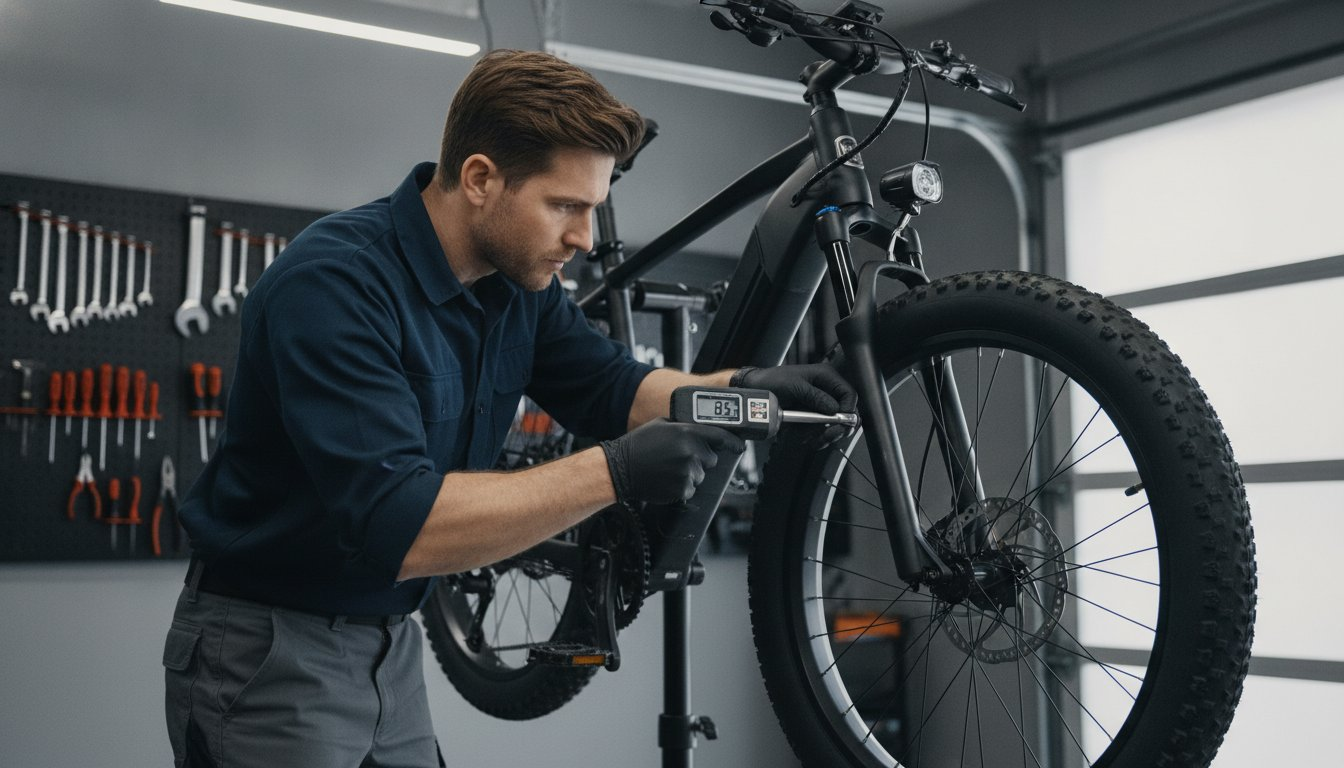
Did you know that emergency room visits for e-bike-related injuries in some California counties nearly quadrupled between 2023 and 2025? As high-performance motors in the 750W to 1000W range become the new standard, the physical demands on your bike’s frame and components have scaled up too. It’s natural to feel a sense of uncertainty about your battery health or whether your brakes can handle a sudden stop at high speeds. Performing a regular e-bike safety inspection isn’t just about maintenance. It’s about taking control of your safety in an era of rapid technological change and stricter 2026 regulations like the mandatory UL 2849 battery certification.
You shouldn’t have to guess if your ride is safe. We’ll show you exactly how to perform a professional-grade audit of your vehicle from the comfort of your garage. This guide provides a clear, actionable checklist covering mechanical integrity, electrical system diagnostics, and critical safety compliance. By the end, you’ll have the confidence to maintain your bike like an expert and the knowledge to identify when a complex issue requires a trip to the shop. Let’s make sure your high-performance machine stays as reliable as the day you first turned the throttle.
Key Takeaways
- Learn how to apply the professional M-Check method to systematically identify structural weaknesses in your frame and fork.
- Master the technical steps of a comprehensive e-bike safety inspection to manage the unique stresses of high-torque, heavy-frame vehicles.
- Gain the skills to spot early signs of battery swelling or terminal corrosion to protect your electrical system and prevent thermal damage.
- Determine exactly when to replace brake pads and rotors by measuring wear against professional safety standards for high-heat stops.
- Understand why specialized tools and expert diagnostics are essential for maintaining the integrity of premium models like the Himiway Zebra or Mokwheel Basalt.
Why an E-Bike Safety Inspection is Essential in 2026
An e-bike safety inspection is far more than a casual glance at your tires before a ride. It’s a systematic, multi-point review of every mechanical and electrical component that keeps you moving. As we move through 2026, e-bikes have evolved into high-performance vehicles with motors that frequently reach the 750W to 1000W range. This leap in power changes the physics of your daily commute. Because e-bikes travel at higher average speeds and carry significantly more weight than traditional bicycles, the kinetic energy involved in a stop or a turn is much greater. Neglecting a single loose bolt or a fraying brake cable can lead to mechanical failure that’s far more dangerous at 28 mph than at 12 mph.
Protecting your investment is another critical factor. Premium models like the Denago City Model 1 or the Mokwheel Obsidian are engineered for longevity, but they aren’t “set it and forget it” machines. Regular checks prevent minor issues from cascading into expensive repairs. Beyond the hardware, your personal safety and legal liability are on the line. With new 2026 regulations focusing on battery certifications and operator registration in states like New Jersey, maintaining a documented service history isn’t just smart maintenance; it’s responsible ownership in a modern urban transportation environment.
E-Bikes vs. Traditional Bicycles: The Safety Gap
The primary difference lies in motor torque. Every time you engage the throttle or pedal assist, the motor applies immediate force to the drivetrain. This constant “tugging” can vibrate bolts loose and accelerate wear on chains and gears. Understanding various e-bike components and classifications helps you realize that these machines are closer to mopeds than standard cycles. Higher speeds also mean you’ll be hitting potholes and curbs with more force, which stresses the frame and fork. Professional assembly is the first line of defense, ensuring that your bike starts its life with the correct torque settings and structural integrity.
When Should You Perform an Inspection?
Consistency beats intensity every time. You should perform a “60-second pre-ride check” before every outing, focusing on tire pressure and brake responsiveness. A “deep dive” inspection is necessary once a month or every 200 miles. Don’t forget seasonal transitions. Preparing for winter requires checking sealants and battery connections against moisture, while summer heat demands a close eye on tire expansion and motor cooling. If you experience a minor fall or ride through a heavy storm, follow a post-incident protocol immediately to check for hidden frame cracks or water ingress in the electrical housing.
Mechanical Integrity: The 20-Point Chassis and Drivetrain Checklist
Start your e-bike safety inspection with the M-Check method. This logical path follows the shape of the letter “M,” beginning at the front wheel, moving up to the handlebars, down to the bottom bracket, up to the saddle, and finally down to the rear wheel. This systematic approach ensures you don’t overlook a single critical bolt or joint. On heavy frames like the Himiway Zebra, structural integrity is paramount. Inspect the frame and fork for hairline cracks or stress fractures, paying close attention to the head tube and motor mounts. These areas absorb the most vibration and torque during your commute.
Cockpit security is another non-negotiable step. Ensure your handlebars, stem, and seat post are torqued exactly to the manufacturer’s specifications. Most riders either under-tighten, which leads to dangerous slipping, or over-tighten, which causes hidden metal fatigue. Use a calibrated torque wrench to verify these connections. If you find yourself hesitating over a mechanical adjustment, our professional safety inspection service can ensure every bolt meets factory standards for your specific model.
The Drivetrain Under Tension
High-torque motors put immense stress on your chain and sprockets. Unlike traditional bikes, e-bikes apply constant force that can cause “ghost shifting,” where the gears skip or change without input. This usually indicates a misaligned derailleur or significant chain stretch. Check your chain’s health regularly to prevent it from wearing down your expensive cassette. For detailed steps on keeping these parts grime-free, refer to our guide on how to maintain an electric bike.
Wheels and Structural Stability
Heavy e-bikes require perfect spoke tension to stay true. You can perform a simple “ping” test by plucking each spoke like a guitar string; they should all produce a similar, clear note. A dull thud indicates a loose spoke that needs immediate attention. Verify that your axle nuts or quick-release levers are fully secured to prevent wheel ejection at high speeds. Finally, lift the bike and wiggle the wheels and cranks laterally. Any “play” or clicking sounds suggest that the bearings in your hubs or bottom bracket are failing and need replacement.
Electrical System Diagnostics: Protecting Your Battery and Motor
While mechanical issues often announce themselves with a squeak or a rattle, electrical failures are frequently silent until they become critical. A thorough e-bike safety inspection must prioritize the health of your battery and motor to ensure long-term reliability. Start with a meticulous visual inspection of the battery casing. Look for any signs of swelling, hairline cracks, or discoloration that might indicate thermal stress. Even a small impact can compromise the internal cells of a high-capacity lithium-ion pack. Pay close attention to the contact points; battery terminals should be clean and free of the black carbon scoring known as arcing. If you spot green or white powdery residue, you’re looking at corrosion that can lead to power fluctuations or permanent damage.
Wiring harness integrity is especially vital for folding models like the Heybike Mars. Constant folding and unfolding can pinch or fray cables near the main hinge. Run your fingers along the protective sheathing to feel for internal wire breaks. Finally, test your interface. Your display should show consistent data, and your pedal assist (PAS) or torque sensor should engage smoothly. A delayed response or “surging” motor often points to a sensor calibration issue or a loose connector deep within the frame.
Lithium-Ion Battery Safety Protocols
Safe storage is the best way to prevent chemical degradation. Avoid leaving your battery in a freezing garage or a scorching car; internal temperatures outside the 50°F to 77°F range can permanently reduce your range. Be vigilant about water ingress. If you notice moisture behind the battery’s LED charge indicator or inside the mounting cradle, dry it immediately and check for seal integrity. Always use the manufacturer-approved charger that came with your bike. Third-party chargers may lack the sophisticated communication protocols required to balance cells safely, increasing the risk of fire.
Motor and Controller Connectivity
Your motor’s phase wires carry high-voltage current and must be securely seated. Check the quick-disconnect plug near the rear hub for tightness and ensure the rubber boot is intact. The controller, which acts as the bike’s brain, can sometimes overheat during long climbs. Audit the controller housing for any signs of warped plastic or a “burnt” smell. In 2026, many premium systems allow for software and firmware updates. Keeping this firmware current ensures that safety features, like motor cut-offs and battery management systems, are operating with the latest protective algorithms.

Braking Power and Traction: Ensuring Road-Ready Performance
Stopping a 70-pound machine traveling at 28 mph requires immense friction and perfectly tuned hardware. During your e-bike safety inspection, you must examine your brake pads first. Professional standards recommend a minimum of 1.5mm of braking material remaining on the pad. If the pads are thinner than a penny, they can’t dissipate heat effectively, leading to dangerous brake fade when you need it most. Inspect your rotors for a mirror-like “glaze” or a rainbow-colored tint. This discoloration indicates the metal has overheated, which significantly reduces the “bite” of your brakes. Check for thinning rotors by feeling the outer edge; a deep lip indicates the rotor is worn beyond its safe limit and needs immediate replacement.
Hydraulic systems provide superior stopping power but require a vigilant eye for maintenance. Squeeze your brake levers; if they feel “spongy” or pull all the way to the grip, you likely have air bubbles trapped in the lines. Search for oily residue around the calipers and lever housing, as even a microscopic leak can lead to total system failure. High-performance e-bikes generate significant heat during long descents, which can degrade hydraulic fluid over time. If your brakes feel inconsistent or lack the “snap” they once had, it’s time to consider professional brake adjustment and repair to restore factory-spec safety.
Hydraulic vs. Mechanical Disc Brake Maintenance
Air bubbles in hydraulic lines compress under pressure, which is why your levers feel soft and unresponsive. This requires a “bleed” to replace the fluid and remove trapped air. Mechanical brakes, while simpler to manage, suffer from “cable stretch” that requires frequent tensioning to maintain stopping power. Centering your calipers is essential to prevent “brake rub,” a common issue that drains your battery and wears pads unevenly. For a step-by-step walkthrough on centering and tensioning your system, see our guide on electric bike brake adjustment.
Tire Pressure and Tread Patterns
Tire pressure directly impacts your safety and efficiency. Low PSI increases your contact patch for better grip but creates “rolling resistance” that kills your battery range. High-torque motors often cause the rear tire to wear significantly faster than the front, so look for “squaring off” in the center tread. For all-terrain powerhouses like the Himiway Zebra, maintaining the correct fat tire pressure is critical for cornering stability on loose surfaces. Check sidewalls for “dry rot” cracks, especially if your bike sat unused through a long winter. Tread depth is your only defense against hydroplaning, so a comprehensive e-bike safety inspection should always include a check for shallow grooves.
Professional Assembly vs. DIY: Why Expert Inspections Save Lives
Assembling a high-performance vehicle from a cardboard box is a significant undertaking. While many riders enjoy the hands-on process, the “Box to Road” risk is real. A professional e-bike safety inspection at the point of assembly acts as a final safety net, catching errors that even experienced home mechanics might overlook. E-bikes aren’t just bicycles; they’re motorized vehicles with complex electrical systems and high-torque drivetrains that require precise calibration to operate safely over thousands of miles. Relying solely on a DIY build can leave hidden vulnerabilities that only surface under the stress of high-speed commuting.
Tartarian E-bikes provides a comprehensive multi-point inspection that goes far beyond a standard tune-up. As an authorized dealer for premium brands like Himiway, Denago, and Mokwheel, we understand the specific engineering requirements of each model. Our process covers structural weld integrity, electrical resistance testing, and drivetrain alignment that DIYers simply can’t replicate without specialized equipment. This expert technical labor ensures your investment remains a reliable tool for years to come rather than a mechanical liability.
The Pitfalls of Home Assembly
Common mistakes during DIY builds often involve the cockpit and braking systems. We frequently see headsets that are incorrectly seated or stem bolts that haven’t been tightened to the correct Newton-meters. These errors can lead to a sudden loss of steering control at high speeds. Misaligned disc brakes are another frequent issue. If the caliper isn’t perfectly centered, it causes uneven pad wear and can lead to catastrophic failure during an emergency stop. Improperly routed cables through folding joints or near the motor can also lead to electrical shorts that damage your controller or battery system.
When to Call the Experts
You should schedule a professional e-bike safety inspection at least once a year or every 1,000 miles. High-mileage commuters put their vehicles through intense stress cycles that require a “Full-Service” deep dive. If your display shows a persistent error code or if the motor response feels laggy, manufacturer-level diagnostic software is usually required for a proper fix. Maintaining a professional service record also protects your warranty and significantly increases the resale value of your bike. It proves to the next owner that the vehicle was maintained to the highest expert standards. Don’t leave your safety to chance after a DIY build. Book your Professional Safety Inspection today to ensure your ride is 2026-ready and fully compliant with local safety regulations.
Master Your Maintenance for a Safer 2026
Your high-performance machine is a sophisticated piece of engineering that deserves more than a surface-level glance. Mastering a systematic e-bike safety inspection ensures that every component, from the high-torque drivetrain to the complex battery management system, is ready for the demands of modern commuting. By combining regular home checks with an understanding of electrical diagnostics, you take active control of your vehicle’s longevity and your personal safety on the road.
While DIY habits build great technical knowledge, certain risks require professional-grade precision. As an authorized service center for top brands, Tartarian E-bikes utilizes expert mechanical and electrical diagnostics to meet comprehensive 2026 safety standards. We identify subtle frame fatigue and software errors that aren’t visible to the naked eye. Protecting your investment and your well-being starts with expert validation. Let’s make sure your bike remains the reliable, sustainable tool you need for every journey ahead.
Schedule Your Professional Multi-Point Safety Inspection today and ride with the confidence of a perfectly maintained vehicle.
Frequently Asked Questions
How often should I perform a safety inspection on my e-bike?
Perform a basic 60-second check before every ride and a comprehensive e-bike safety inspection every 200 miles or once a month. High-mileage commuters who ride daily should double this frequency. Regular checks prevent minor vibrations from loosening critical bolts on your motor or chassis before they cause a breakdown.
Can I use standard bike tools for an e-bike safety check?
You can use standard hex keys for many mechanical parts, but a calibrated torque wrench and diagnostic software are non-negotiable for high-performance models. E-bikes require specific torque settings to handle motor vibrations safely. Standard tools won’t help you read electronic error codes or check internal battery health via the controller’s data port.
What are the most common signs of e-bike battery failure?
Physical swelling, casing cracks, and excessive heat while charging are the most dangerous signs of failure. If your battery range drops by more than 30% suddenly, it likely has a failing internal cell. Never ignore a “burnt” smell or visible corrosion on the terminals; these indicate a serious electrical fire risk.
Why are my e-bike brakes squeaking after an inspection?
Squeaking usually indicates that your rotors or pads have been contaminated with oil or cleaning chemicals during maintenance. It can also happen if the pads weren’t “bedded in” correctly or if the caliper is slightly misaligned. Clean your rotors with isopropyl alcohol and verify that the pads have at least 1.5mm of material remaining.
Is a professional assembly required for my e-bike warranty?
Many premium brands require professional assembly to validate the full warranty period. This ensures that a certified technician has verified the initial torque settings and electrical connectivity from the box. Keeping a record of your professional e-bike safety inspection also helps during warranty claims or if you decide to sell your bike later.
What should I do if I find a crack in my e-bike frame?
Stop riding the bike immediately if you find even a hairline crack in the frame or fork. E-bikes are under much higher stress than traditional bikes due to their weight and motor torque. A small crack can lead to a sudden, catastrophic structural failure at high speeds. Contact a professional to determine if the frame is repairable or needs replacement.
How do I check if my e-bike motor is performing safely?
Listen for unusual grinding noises and feel for excessive vibration through the pedals. Your motor should provide smooth, consistent assistance without “surging” or lagging. If the motor casing feels hot to the touch after a short ride on flat ground, the internal gears or the controller may be failing and require professional diagnostics.
Do I need to check my e-bike lights as part of a safety inspection?
Yes, checking your lights is essential, especially with new 2026 regulations requiring visible rear reflectors and lights at all times. Ensure your headlight and brake light are functioning correctly to stay visible to motorists in all conditions. Faulty wiring near folding joints can often cause lights to flicker or fail completely over time.