
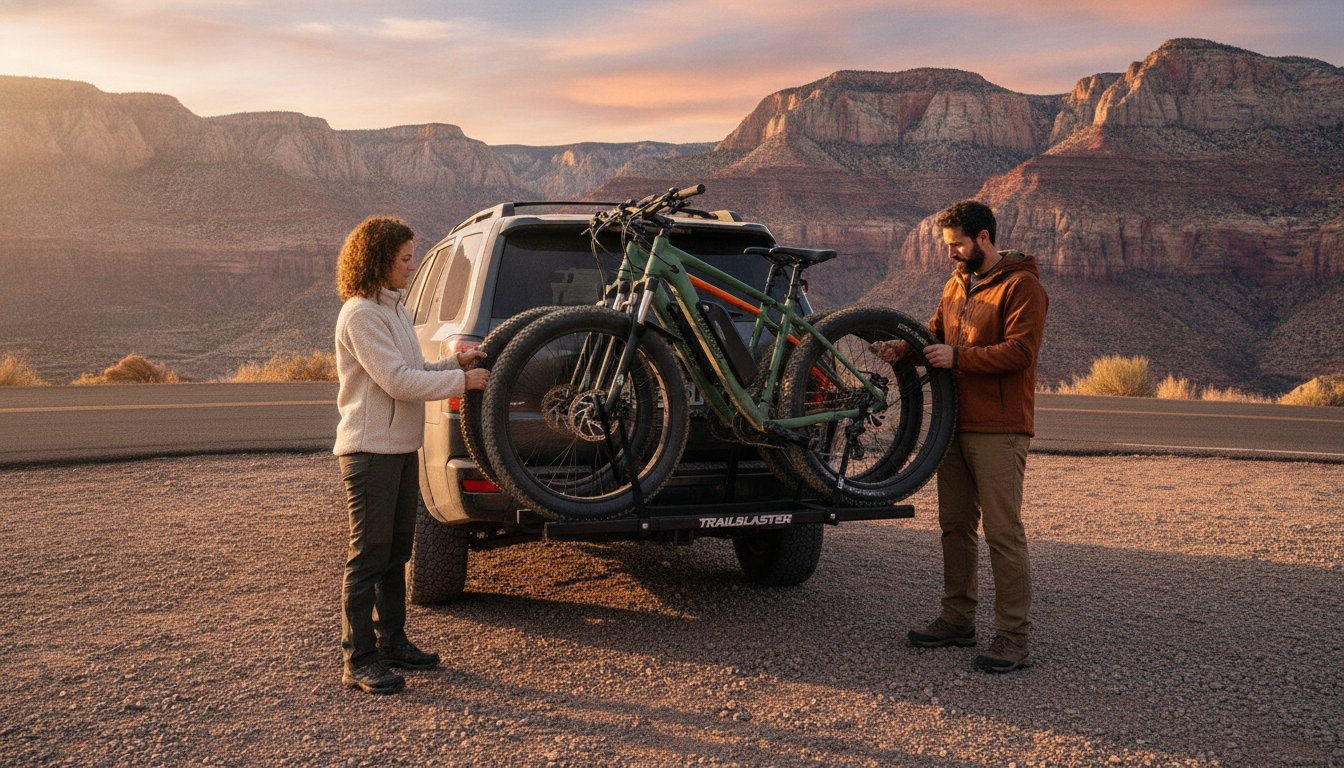
What if the only thing keeping your premium investment from becoming highway debris is a single bolt and a bit of high-speed physics? Most riders don’t realize that standard carriers simply aren’t built for the 80-pound reality of modern electric mobility. Choosing the right e-bike racks in 2026 isn’t just about convenience; it’s a critical safety decision. With new 2026 regulations in states like New Jersey reclassifying e-bikes and requiring registration, the need for secure, compliant transport has never been more urgent.
We know the frustration of wrestling a heavy frame onto a flimsy mount and the constant worry of hitch failure. It’s exhausting to navigate the technical jargon of hitch classes and tongue weight while just trying to plan a weekend trip. This guide will help you master the technical requirements for hauling heavy electric bikes safely and find the perfect rack for your fat-tire setup. We’ll break down the mechanical limits of your vehicle, explore the latest heavy-duty options from brands like Himiway and Mokwheel, and give you the confidence that your bikes will stay exactly where they belong.
Key Takeaways
- Learn why static weight ratings are misleading and how dynamic forces over bumps can double the stress on your transport system.
- Master the math behind hitch classes and tongue weight to ensure your e-bike racks can safely support the combined mass of your gear.
- Identify the specific wheel tray dimensions and wheelbase extensions required to stabilize heavy fat-tire models like the Himiway Zebra.
- Discover how to simplify your loading routine using ramps and the “battery-first” rule to protect both your physical health and your bike’s electronics.
- Find the ideal mounting solutions for high-performance frames like the Mokwheel Obsidian to guarantee a secure, rattle-free journey.
Why Standard Racks Fail: The Physics of E-Bike Transport
A standard bike rack is designed for 25-pound road bikes. Modern electric mobility requires a different breed of engineering. An authentic e-bike rack isn’t just a carrier; it’s a reinforced transport system specifically engineered to handle payloads exceeding 60 pounds per bike. Choosing specialized e-bike racks ensures that your structural foundation is sound, rather than risking a scratched frame or a catastrophic failure on the highway.
The biggest mistake riders make is looking only at the “static” weight. If your bike weighs 60 pounds, it only weighs that much while the car is parked. Once you hit a pothole or a bridge expansion joint at 65 mph, that bike exerts “dynamic” force. This can easily double the effective load, making a 60-pound bike feel like a 120-pound hammer hitting your rack’s components. Trunk-mounted straps and roof-mounted trays simply aren’t built to withstand these G-loads. They’re obsolete for heavy electric machines for several reasons:
- Inadequate weight ratings for 60lb+ frames.
- High risk of strap failure or paint damage under heavy loads.
- Unstable mounting points that can’t handle high-speed vibrations.
The Danger of Overloading Standard Racks
Standard racks often use lightweight aluminum to keep the rack itself easy to carry. Under the constant stress of heavy e-bikes, these components suffer from structural fatigue. Steel is the preferred choice for heavy-duty e-bike racks because it handles repeated vibrations without cracking. Beyond the rack itself, excess weight at the very rear of your vehicle changes everything. It shifts the center of gravity, which can lengthen your braking distances and make steering feel light or unresponsive. From a legal standpoint, using a rack rated for 35 pounds to carry a 70-pound bike could void your insurance if an accident occurs.
Hitch-Mounted Platforms: The Gold Standard
Hanging-style racks, where bikes dangle from the top tube, are a recipe for disaster with electric models. They allow bikes to sway into each other, potentially damaging sensitive motor housings or battery compartments. Platform-style racks provide a solid base that supports the wheels directly, eliminating frame-contact stress. This design is essential for protecting the mid-drive motors found on premium models. A true “e-bike compatible” rack is defined as a hitch-mounted system with a verified weight capacity of at least 60 pounds per tray and a reinforced steel receiver interface.
The receiver hitch is the true foundation of your transport safety. It’s the only point on your vehicle designed to transfer these massive dynamic loads directly into the chassis. Relying on anything else is a gamble with your equipment and your safety on the road.
Essential Technical Specs: Hitch Classes and Tongue Weight
Your vehicle’s hitch is the bridge between your car and your adventure. If that bridge is too weak, the consequences can be devastating. Many riders focus solely on the rack’s weight rating while ignoring the vehicle’s tongue weight capacity. To calculate your total payload, you must add the weight of the rack, both bikes, and any accessories like locks or fenders. For a dual fat-tire setup, this often exceeds 200 pounds. A heavy-duty rack might weigh 65 pounds, while two bikes like the Himiway Zebra and a Mokwheel Basalt add another 160 pounds. This total mass sits entirely behind the rear axle, creating a unique mechanical stress that requires a Class III or Class IV hitch.
Most mid-size SUVs in 2026, such as the latest Honda Pilot or Toyota Highlander models, typically offer a tongue weight capacity between 350 and 500 pounds. While this sounds like plenty, the “10% rule” of towing reminds us that tongue weight is generally 10% of the total towing capacity. If your vehicle is only rated to tow 2,000 pounds, your 200-pound limit is dangerously close to the total weight of your e-bike racks and gear. Always verify your specific VIN’s capacity in the owner’s manual before mounting heavy equipment. If you are unsure about your vehicle’s compatibility, you can explore our selection of specialized e-bike racks and expert advice to find a safe match.
Hitch Class II vs. Class III: A Comparison
Class II hitches use a 1.25-inch receiver and are generally limited to 350 pounds of tongue weight. While they might technically hold the weight, the smaller aperture allows for more side-to-side wobble, which is amplified by the mass of an electric bike. Class III hitches use a 2-inch receiver and provide the structural rigidity necessary for heavy fat-tire models. Never use a 1.25-to-2-inch riser adapter to fit a larger rack into a smaller hitch. These adapters move the load further away from the vehicle, which can effectively double the stress on the hitch and lead to catastrophic metal fatigue.
Tongue Weight and Vehicle Safety
Finding your tongue weight rating is usually as simple as checking the sticker inside the driver-side door jamb or the towing section of your manual. It is the maximum vertical pressure the hitch can handle. Distance matters just as much as weight. The physical distance between the hitch pin and the outer bike tray acts as a lever, multiplying the downward force and increasing stress on the receiver’s structural welds. This leverage effect means that a four-bike rack puts significantly more strain on your car than a two-bike rack, even if the total weight is identical. Stick to 2-inch receivers for any setup involving more than one heavy EV to ensure the hitch pin remains secure under the constant vibration of the road.
Fat Tires and Frame Geometry: Solving the Compatibility Puzzle
E-bike design has evolved faster than many generic carrier manufacturers. While earlier models mirrored standard mountain bikes, today’s heavy-duty machines feature massive tires, extended wheelbases, and unique frame shapes that require a precision fit. Choosing e-bike racks that don’t account for these geometric shifts can lead to frame damage or, worse, a bike shifting during transit. You need a system that respects the specific architecture of your ride.
Wheelbase length is a frequently overlooked technical spec. Long-range e-bikes often feature stretched frames to accommodate larger battery arrays and provide better high-speed stability. If your rack’s wheel trays are too short, the tires will hang over the edges, putting immense lateral stress on the ratcheting straps. Always verify that your rack can handle wheelbases of 50 inches or more if you’re hauling full-sized adventure models.
Transporting Fat Tire E-Bikes
Stability begins where the rubber meets the tray. A standard V-shaped tray is designed for 2-inch tires; placing a 4-inch or 5-inch fat tire electric bike into one creates a precarious “perch” rather than a secure seat. This mismatch allows the bike to wobble, which fatigue-tests the rack’s arm over time. High-quality e-bike racks utilize wide, oversized cradles that fully envelope the tire’s footprint. Check your ratcheting strap length as well. Standard straps often won’t reach around high-volume tires mounted on deep rims, making extra-long heavy-duty straps a mandatory upgrade for secure transport.
Step-Through and Mid-Drive Frame Solutions
Step-through frames, like the Denago City Model 1, present a unique mounting challenge because they lack a traditional horizontal top tube. If your rack uses a “frame-contact” hook, you’ll likely need a top-tube adapter bar. This accessory creates a temporary bridge between the seat post and the handlebar stem, providing a level surface for the rack’s clamping arm. It’s a simple fix that prevents the bike from tilting at an odd angle during the drive.
Protecting the mechanical heart of your bike is equally vital. Mid-drive motor housings and sensitive wiring harnesses often sit exactly where some lower-end rack clamps want to grip. Avoid any rack that puts direct pressure on the motor casing or battery interface. Using frame protection pads and ensuring a “wheel-only” contact system is a smart move. Remember, keeping your frame free from transport-induced stress is a key part of how to maintain an electric bike for the long haul. Finally, be mindful of fenders. Metal and plastic guards are easily crushed by ratcheting arms, so look for racks that secure the bike via the tire or use fender-friendly spacers.

Loading Techniques and Road Safety Protocols
Loading a 75-pound machine isn’t just about physical strength; it’s about following a disciplined sequence. Even the most robust e-bike racks can be undermined by poor loading habits or neglected safety checks. When you’re dealing with the massive weight of modern electric mobility, small errors in securement are magnified by highway speeds. Establishing a repeatable protocol is the best way to protect your vehicle, your bikes, and other drivers on the road.
The “Battery-First” rule is your most important safety habit. Removing the battery pack typically sheds between 7 and 12 pounds, which significantly reduces the static load on the rack’s arm. Beyond weight savings, it protects the expensive lithium-ion cells from the harsh vibrations of the road and prevents potential moisture ingress into the battery terminals during a downpour. If you’re still looking for the right equipment to handle these heavy loads, you can shop our professional-grade e-bike racks to find a system that includes integrated loading ramps.
The 5-Step Loading Process for Heavy E-Bikes
- Step 1: Battery removal and cockpit prep. Take the battery out and use neoprene covers for the display screen and controller to prevent stone-chip damage.
- Step 2: Ramp alignment and steady ascent. Align your loading ramp perfectly with the tray. Walk the bike up slowly, using the walk-assist mode if your bike has it, to avoid straining your back.
- Step 3: Primary clamp engagement. Secure the main arm first. Whether it’s a frame hook or a wheel-only clamp, this provides the initial stability needed to let go of the bike.
- Step 4: Secondary strap tensioning. Thread the ratcheting straps through the wheels. Ensure they’re tight enough to prevent lateral sliding but not so tight that they deform the rim.
- Step 5: Lighting and plate visibility. Check that your bikes don’t completely obscure your taillights or license plate. In many states, an obscured plate is a guaranteed traffic stop.
On-Road Inspections and Maintenance
Your job doesn’t end when the hitch pin clicks. You must perform a “50-mile check” during every long trip. Metal expands and contracts with temperature changes, and the initial vibrations of a highway drive can settle the rack into the receiver. Pull over after the first hour to ensure every bolt and strap is still under full tension. To perform a proper wobble test, grasp the rack at its furthest point and apply firm lateral pressure; any clicking or movement at the receiver indicates the anti-rattle bolt needs immediate attention.
Long-term care is just as vital. Road salt, grime, and moisture can cause pivot points to seize over time. After a trip through winter conditions or coastal air, spray down the rack’s moving parts with fresh water and apply a light lubricant to the locking mechanisms. This prevents corrosion and ensures the rack remains easy to operate for years to come.
Choosing the Right Rack for Your Mokwheel or Himiway E-Bike
Selecting a transport solution for high-performance machines requires matching professional-grade hardware to your specific frame. At Tartarian E-bikes, we only recommend e-bike racks that have been vetted for the exact dimensions and weight profiles of the industry’s leading all-terrain models. A rack that works for a standard mountain bike will often fail when faced with the sheer mass and geometry of an adventure-ready electric vehicle. We’ve seen how the wrong pairing can lead to expensive repairs or compromised road safety.
The Himiway Zebra is a prime example of this engineering challenge. Its massive 4-inch tires and robust all-terrain frame require extra-wide wheel cradles to prevent lateral sliding during high-speed turns. If the cradle is too narrow, the tire sits on top of the rim rather than inside it, creating a pivot point that can loosen your straps over time. For the Denago Commute Model 1, the focus shifts toward a balance of weight and portability. Since it’s a lighter commuter, you can opt for a more streamlined rack, but you must still ensure the hitch interface is a 2-inch Class III to account for the dynamic forces we discussed in the physics section.
The Mokwheel Obsidian Case Study
The Mokwheel Obsidian e-bike represents the peak of heavy-duty transport requirements. Because of its sophisticated suspension system, we strongly advise against any rack that uses a frame-contact hook. Constant pressure on a moving suspension linkage during a long drive can lead to premature wear or even seal failure. A wheel-on platform rack is the only safe way to secure an Obsidian, as it lets the bike’s own suspension absorb road vibrations naturally without putting stress on the frame. If you’re considering a similar powerhouse, check out the Himiway Zebra for sale as another model that demands this level of structural integrity from its carrier.
Final Checklist Before You Buy
Don’t let a small oversight ruin your first trip. Before you finalize your purchase, run through this technical verification list to ensure your vehicle and bikes are fully protected:
- Confirm your hitch size is exactly 2 inches for a Class III or IV rating.
- Verify your vehicle’s tongue weight capacity against the combined weight of the rack and both bikes.
- Measure your e-bike’s wheelbase from axle to axle; many long-range models exceed 48 inches and require extended trays.
- Check tire width to ensure the rack trays can fully envelope 4-inch or 5-inch fat tires.
- Ensure the rack’s weight capacity per bike is at least 15% higher than your bike’s actual weight.
Ready to secure your ride with a system built for the road? Browse our curated selection of e-bike racks to find the perfect heavy-duty match for your vehicle and your next adventure.
Secure Your Journey with Confidence
Mastering the physics of heavy-duty transport is the final step in becoming a truly mobile rider. You now understand that static weight is only half the story; the dynamic forces of the highway require a rock-solid foundation. By prioritizing a Class III hitch, removing batteries before transit, and matching your carrier to the specific geometry of your fat-tire frame, you’ve eliminated the primary causes of equipment failure. These technical choices ensure that your focus remains on the trail ahead, not on the rearview mirror.
At Tartarian E-bikes, we don’t just sell equipment; we provide the peace of mind that comes from professional expertise. As an authorized dealer for Himiway, Mokwheel, and Denago, we offer national shipping on premium accessories and provide expert assembly and safety inspections to keep your gear in peak condition. Don’t leave your investment’s safety to chance. It’s time to upgrade your adventure with a professional e-bike rack from Tartarian E-bikes. Your next great destination is waiting, and with the right setup, you’re ready to reach it safely.
Frequently Asked Questions
Can I use a standard bike rack for my e-bike if I remove the battery?
No, you generally shouldn’t rely on a standard rack even with the battery removed. While taking out the battery sheds about 7 to 12 pounds, a typical 75 pound bike still weighs over 60 pounds. Most standard racks are only rated for 35 pounds per bike. Using one risks structural metal fatigue or a total failure of the mounting arms during a highway drive.
How do I know if my car hitch can handle two 70lb e-bikes?
You must check your vehicle’s tongue weight rating, which is usually found in the owner’s manual or on a sticker inside the driver-side door. Add the weight of your e-bike racks (typically 50 to 70 pounds) to the combined weight of your bikes. This total must be lower than your car’s maximum vertical load limit to ensure the hitch won’t bend or crack under pressure.
Do I need a special rack for fat tire e-bikes?
Yes, fat tire models require oversized wheel trays and extra-long ratcheting straps. Standard trays are built for 2-inch tires and won’t allow a 4-inch or 5-inch tire to sit securely. Without a wide cradle, the bike will perched on top of the tray rather than nestled inside it. This causes dangerous lateral wobble and puts excessive stress on the strap’s anchor points.
Are e-bike racks with ramps worth the extra cost?
Yes, ramps are a vital safety feature for anyone who wants to avoid physical strain. Lifting a 75-pound machine into a high SUV tray is a recipe for back injury or accidental vehicle scratches. Ramps allow you to use your bike’s “walk-mode” to roll it into place effortlessly. It’s a small investment that makes solo trips much more manageable and safer for your equipment.
Will an e-bike rack block my backup camera or license plate?
Most hitch-mounted systems will partially or fully obscure your backup camera and license plate when bikes are loaded. This is a common issue that can lead to traffic stops in states with strict visibility laws. You might need to install a license plate relocation kit or choose a rack with integrated light bars to stay compliant with local 2026 road regulations.
What is the best way to lock my e-bike to the car rack?
The best security strategy is a multi-layered approach. Use the rack’s integrated locking arms for short stops, but always add a heavy-duty, hardened steel chain for longer periods. Thread the chain through the bike frame and around the vehicle’s hitch loops rather than just the rack itself. This ensures that even if the rack is tampered with, the bikes remain anchored to your car.
Can I use an e-bike rack on the back of an RV or trailer?
Only use a rack if it is explicitly “RV Rated” by the manufacturer. The rear of a trailer or RV experiences much more violent vertical movement and G-loads than a standard car. A non-rated rack will quickly succumb to metal fatigue due to this intensified “whip” effect. Always verify that your e-bike racks are built to withstand the unique physics of long-wheelbase towing.
How much does a high-quality e-bike rack cost in 2026?
Prices for professional-grade transport systems depend on weight capacity, materials, and integrated features like ramps or locks. While budget options exist, a high-quality steel platform rack is an investment in the safety of your expensive bikes. Choosing a durable, authorized system prevents the catastrophic costs of a highway accident or frame damage. The value lies in the reinforced engineering that handles the dynamic loads of modern electric mobility.