
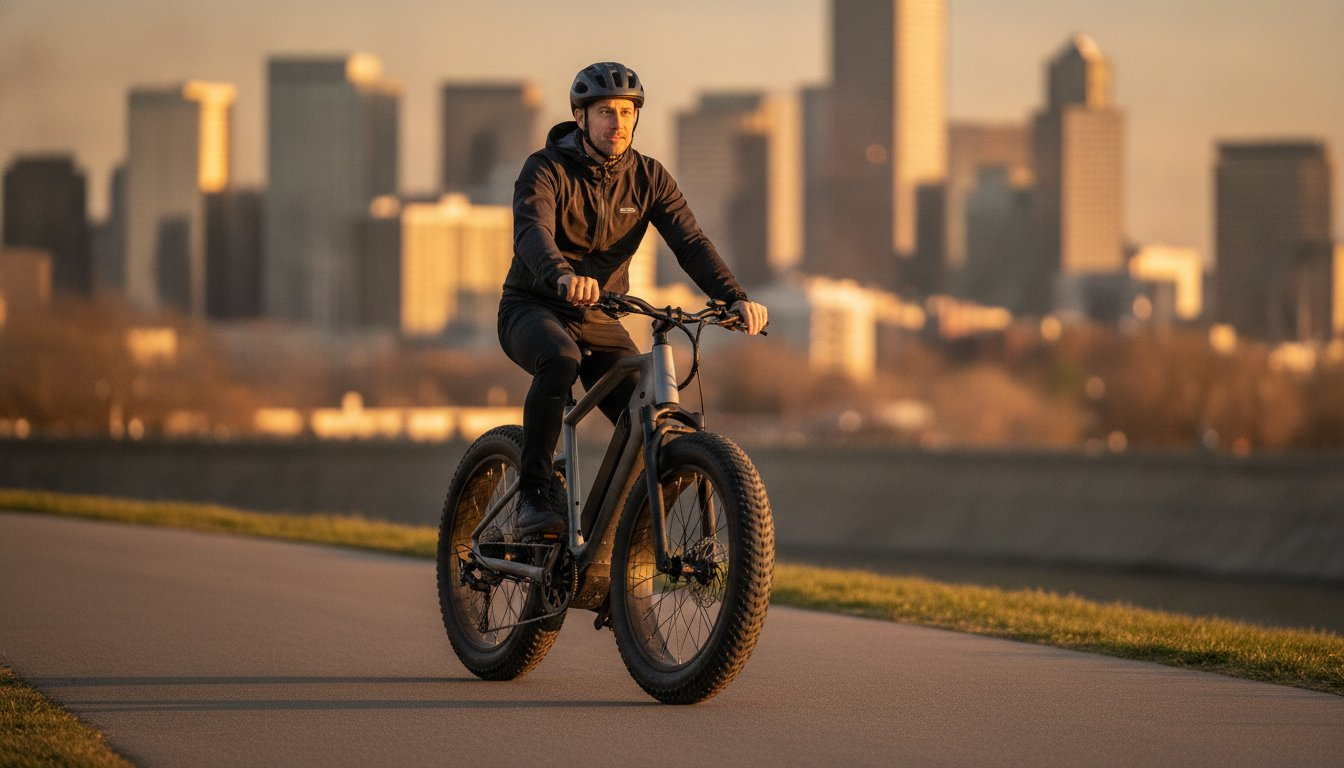
Most riders assume a fat tire electric bike is just a rugged design trend meant for sandy beaches or snowy trails. In reality, that extra volume of rubber is your most effective engineering tool for personal safety and ride quality. If you’ve ever felt your heart skip a beat when a narrow tire catches a wet rail or a deep pothole, you know that stability isn’t just a luxury; it’s a necessity. We understand the hesitation that comes with heavier frames and the confusion over how much motor power you actually need to move those wider treads.
You deserve to feel confident every time you swing a leg over the saddle. This comprehensive guide will help you master the technical trade-offs of the 2026 market, from understanding the new UL 2849 safety standards to picking a motor that won’t lag. We’ll explore how these bikes provide a smoother, vibration-free experience on any terrain. By the end of this expert guide, you’ll know exactly how to choose, ride, and maintain a premium e-mobility investment that keeps you upright and comfortable.
Key Takeaways
- Learn how the “floatation” principle and 4-inch wide tires provide unmatched balance and safety on soft or uneven terrain.
- Understand why a high-torque 750W+ motor is essential for a fat tire electric bike to handle the weight and rolling resistance of wider treads.
- Discover how high-volume air tires act as a primary suspension system to absorb road vibrations and potholes for a smoother ride.
- Master the secrets of tire pressure management and mechanical checks to protect your premium e-mobility investment and prevent rim damage.
- Identify whether an urban commuter or all-terrain explorer model best fits your specific riding goals and terrain needs.
What is a Fat Tire Electric Bike? Engineering for Stability
A fat tire electric bike isn’t just a bicycle with oversized wheels. It’s a precision-engineered stability platform. By definition, these machines feature tires that are 4 inches wide or larger, creating a massive footprint that changes how the bike interacts with the ground. To understand the roots of this design, you can look at the history of What is a Fat Tire Electric Bike? which highlights how these frames were originally built for extreme conditions like deep snow and loose sand.
The core engineering marvel here is the “floatation” principle. On a traditional thin tire, your weight is concentrated on a tiny sliver of rubber, causing you to sink into soft surfaces. A wider tire distributes that same weight over a much larger surface area. This allows the bike to “float” on top of the terrain rather than cutting through it. It’s the difference between walking through snow in boots versus using snowshoes.
Physics also dictates that more rubber on the ground leads to better contact patch dynamics. When you have a larger surface area touching the road, your braking distance decreases and your cornering confidence increases. In 2026, we’ve seen a massive shift in tire technology. Modern rubber compounds are now engineered to be stiffer in the center and softer on the edges. This specific construction reduces rolling resistance on flat pavement while maintaining incredible grip when you lean into a turn.
Tire Width vs. Traditional E-Bikes
Think of the difference between a 2-inch commuter tire and a 4-inch fat tire as the difference between a road car and an off-road SUV. While thin tires are efficient on smooth asphalt, they transmit every vibration directly to your wrists. Fat tires operate at much lower pressures, often between 5 and 20 PSI. This low pressure allows the tire to deform over rocks and potholes, acting as a natural suspension system that smooths out the ride before the frame even feels the impact. Fat tires are the ultimate stability platform for modern riders.
The Evolution of All-Terrain Mobility
What started as a niche tool for Alaskan snow racers has become a mainstream solution for urban commuters. In the past, the “weight penalty” of these massive wheels made them difficult to pedal. High-torque electric motors have completely solved this problem, providing the boost needed to overcome the extra mass without breaking a sweat. Premium models like the Himiway Zebra showcase how modern engineering uses reinforced aluminum frames and high-capacity batteries to turn these heavy-duty machines into agile, daily-use vehicles.
Why the Extra Width Matters: Stability, Traction, and Comfort
Stability isn’t just a marketing buzzword; it’s a physical reality when you increase the tire’s surface area. Most riders worry about losing their balance at low speeds or on uneven pavement. A fat tire electric bike addresses this fear by providing a wide, forgiving foundation that resists the urge to “wash out” on loose surfaces. This stability is rooted in the physics of pressure distribution. By spreading the weight of the bike and rider over a larger footprint, the downward force per square inch is drastically reduced. This technical advantage is why these machines don’t sink into soft turf or slide on gravel patches that would trip up a narrow-tired commuter.
Comfort comes from the massive air volume held within the casing. These tires hold significantly more air than standard ones, allowing them to act as a primary suspension system. This cushioning protects the bike’s sensitive electronics and your joints from jarring impacts. By absorbing these forces, the design helps the vehicle adhere to federal safety requirements for bicycles, ensuring that structural components and steering systems aren’t subjected to excessive, damaging vibrations. It’s a proactive way to maintain the longevity of your investment while enjoying a plush ride.
Traction on steep inclines and slick surfaces is where this width truly shines. When you’re climbing a hill on a wet morning, a narrow tire might spin out, wasting motor energy and compromising your safety. The massive contact patch of a fat tire electric bike bites into the surface, maximizing the efficiency of your motor. Whether it’s light snow, mud, or rain-slicked asphalt, you’ll have the grip required to maintain forward momentum. These bikes are also engineered for higher weight capacities, as the wider rims and reinforced tires distribute heavy payloads without risking spoke failure or rim deformation.
Confidence for Every Rider
New riders often feel intimidated by the “twitchiness” of traditional bicycles. Narrow tires react to every pebble and crack in the road, requiring constant micro-corrections. Fat tires do the opposite; they mute the road. This creates a psychological benefit where you stop scanning for every minor obstacle and start enjoying the scenery. For those carrying extra gear or looking for the highest weight capacities, check out our guide to the best electric bike for heavy riders to see how frame geometry supports these oversized wheels.
Conquering Unpredictable Terrain
Urban environments are full of traps like trolley tracks, wet metal plates, and sudden gravel patches. These obstacles can easily take down a standard bike, but the extra width provides the grip needed to stay upright. Fat tires transform a bumpy, stressful commute into a smooth glide over the city’s imperfections. If you’re ready to upgrade your ride, the team at Tartarian E-bikes can help you find a model that balances this rugged power with everyday usability.
Key Components: What Powers a Premium Fat Tire E-Bike?
Power is a non-negotiable requirement for this category of e-mobility. Because of the increased rolling resistance and mass of oversized rubber, a standard 250W or 500W motor often feels sluggish. To maintain a responsive ride, a premium fat tire electric bike typically requires a motor with a 750W output or higher. This ensures you have the necessary torque to push through soft sand or climb steep, gravel-heavy inclines without the motor overheating or lagging under the load. It’s about matching the mechanical “grunt” to the physical footprint of the bike. When evaluating your options, it’s equally important to consider the manufacturer behind the machine; our review of the best e bike brands of 2026 breaks down which companies lead the industry in motor reliability, UL 2849 safety compliance, and long-term serviceability.
Energy management is the next critical pillar. High-capacity batteries are essential because all-terrain riding is energy-intensive. You’ll often find batteries exceeding 700Wh on top-tier models to compensate for the drag created by wider treads. Structural integrity also takes center stage. These frames must be reinforced to handle the combined weight of the larger wheels, heavy-duty motor, and the rider. A flimsy frame would flex under the stress of off-road impacts, compromising your steering precision and long-term safety.
Modern riders also expect sophisticated data at their fingertips. Integrated tech, such as smart LCD displays and app connectivity, has become the standard for 2026. These systems provide real-time range management, which is vital when you’re miles away from a charging point. They calculate your remaining distance based on your current assist level and terrain, taking the guesswork out of your adventure.
Motor and Battery Synergy
Choosing between hub motors and mid-drives depends entirely on your environment. Hub motors are excellent for throttle-heavy commuting and offer a simpler mechanical design. Mid-drive systems, however, leverage the bike’s gears to provide superior torque for technical climbing. Your tire pressure directly impacts this synergy. Running low PSI for better grip increases tire “squish,” which draws more power from the battery. The Himiway Zebra serves as a benchmark here, balancing a high-torque motor with a massive battery to ensure the “weight penalty” of fat tires never slows you down.
Braking and Gearing Systems
Stopping a high-speed, heavy-duty machine requires immense friction. Hydraulic disc brakes are a necessity, not an upgrade. They provide the consistent, one-finger stopping power needed to control a fat tire electric bike in wet or muddy conditions. To assist the motor, wide-range gearing is equally important. It allows you to find the perfect cadence on steep climbs, reducing the strain on the electrical system. The Mokwheel Basalt illustrates this perfectly, integrating a robust drivetrain with enough power to handle both urban utility and rugged weekend trails.

Safety and Longevity: The Critical Role of Maintenance and Assembly
Owning a fat tire electric bike is a significant investment in your mobility and freedom. However, the very features that provide stability and power also demand a higher level of mechanical attention. These machines are heavy, often weighing between 70 and 90 pounds. This mass puts incredible stress on every bolt, spoke, and bearing. Unlike a lightweight road bike, a heavy-duty e-bike can vibrate components loose over time. Regular mechanical checks aren’t just about longevity; they’re about preventing a mid-ride failure that could compromise your safety.
Tire pressure management is perhaps the most misunderstood aspect of fat tire ownership. While running low PSI provides that signature “floatation” on soft terrain, doing so on hard pavement can lead to pinch flats. This happens when the tire compresses enough for the rim to pinch the inner tube against a curb or pothole, often causing rim damage as well. You’ve got to balance your pressure based on the surface you’re riding. Similarly, your braking system works much harder than on a standard bicycle. Stopping a high-speed, heavy-frame bike generates significant heat, which wears down brake pads faster than you might expect. Monitoring your pad thickness every 100 miles is a practical habit that ensures you always have the stopping power you need.
The trend of “bike-in-a-box” delivery has led many riders to attempt DIY assembly. While it’s tempting to save time, professional assembly is vital for your long-term safety. An expert technician doesn’t just tighten bolts; they check the torque to precise specifications, align the hydraulic calipers, and ensure the electrical connections are seated correctly to prevent future motor or battery failures. A safe ride starts with a professionally inspected bike.
Professional Assembly vs. Box-to-Road
A multi-point safety inspection is the bridge between a box of parts and a reliable vehicle. During this process, technicians verify that the drivetrain is indexed and the electronics are functioning within safe parameters. Skipping this step often leads to long-term motor issues or battery drainage problems that aren’t covered by warranty if caused by poor assembly. For a deeper dive into protecting your investment, see our complete 2026 e-bike maintenance manual.
Essential Maintenance for Fat Tires
Maintaining the drivetrain is critical, especially if you take your bike off-road. Sand, mud, and trail debris act like sandpaper on your chain and gears. Regular cleaning and lubrication prevent premature wear on these expensive components. Additionally, replacing a fat tire tube is a physically demanding task that requires specific tools and strength. If you’re unsure about your bike’s current condition, we recommend booking a professional safety inspection service to ensure every component is trail-ready and secure.
Choosing Your Adventure: Matching a Fat Tire E-Bike to Your Lifestyle
Selecting the right fat tire electric bike is a personal decision that depends entirely on your intended environment. While the engineering principles of stability and high-torque power apply to every model, the specific frame geometry and feature set should mirror your daily goals. You don’t need a heavy-duty trail machine if your primary focus is a vibration-free commute to the office. Conversely, a utility-focused build might be the perfect solution if you plan on replacing your car for local errands and grocery runs. It’s about aligning the bike’s capabilities with your reality.
Urban commuters generally look for a blend of comfort and visibility. In a city, the extra tire width acts as a safety net against trolley tracks, wet metal plates, and sudden potholes. The goal here is a plush, upright ride that keeps you confident in traffic. Weekend explorers, however, must prioritize battery range and all-terrain versatility. If your adventures take you off the pavement, you’ll need a machine that can sustain its power output over varied elevations. For utility riders, the focus shifts to cargo capacity. These riders need reinforced rear racks and high payload ratings to ensure the bike handles safely even when fully loaded with gear.
Before committing to a purchase, scheduling a test ride is the most important step you can take. No amount of technical data can replicate the tactile sensation of how a fat tire bike corners or how the motor assists your cadence. For those exploring rugged alpine environments, visiting a specialized retailer like Avalanche Pro Shop can provide the hands-on experience needed to understand the “floatation” effect and the planted, sturdy feel that defines this category of e-mobility. It’s the difference between reading about stability and feeling it under your feet.
Top Models for 2026
- Denago Commute Model 1: This model serves as an ideal entry point for urban riders. it provides the stability of wider tires in a package designed for city visibility and ease of use.
- Mokwheel Obsidian: For those seeking peak performance, this model features a full suspension system. It’s built to handle aggressive trail impacts while maintaining control at higher speeds.
- Heybike Mars: This bike offers the unique versatility of a folding frame without sacrificing the confidence of a fat tire electric bike, making it perfect for riders with limited storage space.
Final Checklist for New Owners
Don’t overlook the importance of proper sizing. A frame that doesn’t match your height and reach will lead to fatigue, regardless of how well the tires absorb shocks. Ensure you can maintain a natural, supportive posture during long rides. Once you’ve secured the right fit, protect your investment with essential accessories. High-quality e-bike helmets, heavy-duty locks, and vehicle racks designed for heavier e-bike frames are necessary for a safe and functional experience. Ready to see the difference for yourself? Explore our full collection of premium fat tire e-bikes and find the model that fits your journey.
Ready to Transform Your Riding Experience?
Choosing a fat tire electric bike is more than a design choice; it’s a commitment to a safer, more stable journey. You now understand how the floatation principle keeps you upright on soft terrain and why a high-torque 750W motor is essential for consistent performance. We’ve also explored the critical role of professional assembly in protecting your electronics and frame longevity. These technical details ensure that your bike isn’t just a vehicle, but a reliable partner for years to come.
As an authorized dealer for Himiway, Mokwheel, and Denago, we’re here to support your transition to modern e-mobility. We include professional assembly and a rigorous safety inspection with every purchase to guarantee your peace of mind. With nationwide shipping and expert support, getting your premium ride delivered is simple and secure. Browse our Expert-Assembled Fat Tire E-Bikes and find the perfect match for your lifestyle. Your next adventure starts with a ride you can truly trust.
Frequently Asked Questions
Are fat tire electric bikes harder to pedal?
Fat tire electric bikes are only harder to pedal when the motor is turned off because of their increased weight and rolling resistance. However, modern e-bike motors are specifically designed to overcome this “weight penalty.” When you engage the pedal assist, you won’t feel the extra effort required to move the wider treads, making the ride feel as light and responsive as a standard bicycle.
How long do fat tires last on an e-bike?
Most fat tires last between 2,000 and 4,000 miles, though your specific lifespan depends on the terrain and rubber compound. Riding on abrasive asphalt will wear the knobby treads down faster than soft dirt or snow. Regularly checking for cracks and maintaining proper pressure helps extend the life of your rubber and ensures consistent traction throughout the life of the tire.
Do fat tire e-bikes need more maintenance than regular e-bikes?
Yes, fat tire models require more frequent mechanical attention due to the stress their weight puts on components. You’ll need to monitor spoke tension and bolt torque more often than on a lightweight road bike. Additionally, the high air volume in a fat tire electric bike makes it sensitive to pressure changes, requiring weekly checks to prevent rim damage or pinch flats.
Can I ride a fat tire electric bike on the pavement?
You can absolutely ride a fat tire electric bike on pavement, and many commuters prefer it for the added stability. The wider contact patch makes the bike feel planted on wet roads and metal plates. While you might notice more “road hum” from the knobby treads, the trade-off is a significantly smoother ride over city potholes and cracks that would jar a thinner tire.
Are fat tire e-bikes good for seniors or beginners?
These bikes are an excellent choice for seniors and beginners because they prioritize balance and stability over raw speed. The wide footprint reduces the “twitchy” feeling often associated with narrow tires, giving the rider more confidence at low speeds. This planted feel makes it much easier to stay upright while starting, stopping, or navigating uneven driveways and neighborhood paths.
What is the best tire pressure for a fat tire e-bike?
The ideal tire pressure typically ranges from 5 to 20 PSI depending on where you are riding. For soft surfaces like sand or snow, lower pressures around 5 to 10 PSI provide the necessary “floatation” to stay on top of the surface. If you’re riding on hard pavement, increasing the pressure to 15 or 20 PSI reduces rolling resistance and protects your rims from impact damage.
Is a 750W motor enough for a fat tire electric bike?
A 750W motor is the industry standard for a fat tire electric bike because it provides the torque needed to move the extra mass without draining the battery too quickly. This power level ensures you can maintain speed on hills and push through soft terrain without the motor overheating. It also aligns with the legal power limits for e-bikes in most jurisdictions.
Can I put fat tires on a regular electric bike?
No, you cannot put fat tires on a regular electric bike because the frame and fork are not wide enough to accommodate them. Fat tires require specialized wide rims and specific frame geometry to provide enough clearance for the rubber to rotate. Attempting to force wider tires onto a standard frame will cause the rubber to rub against the chainstays or fork, causing immediate damage.