
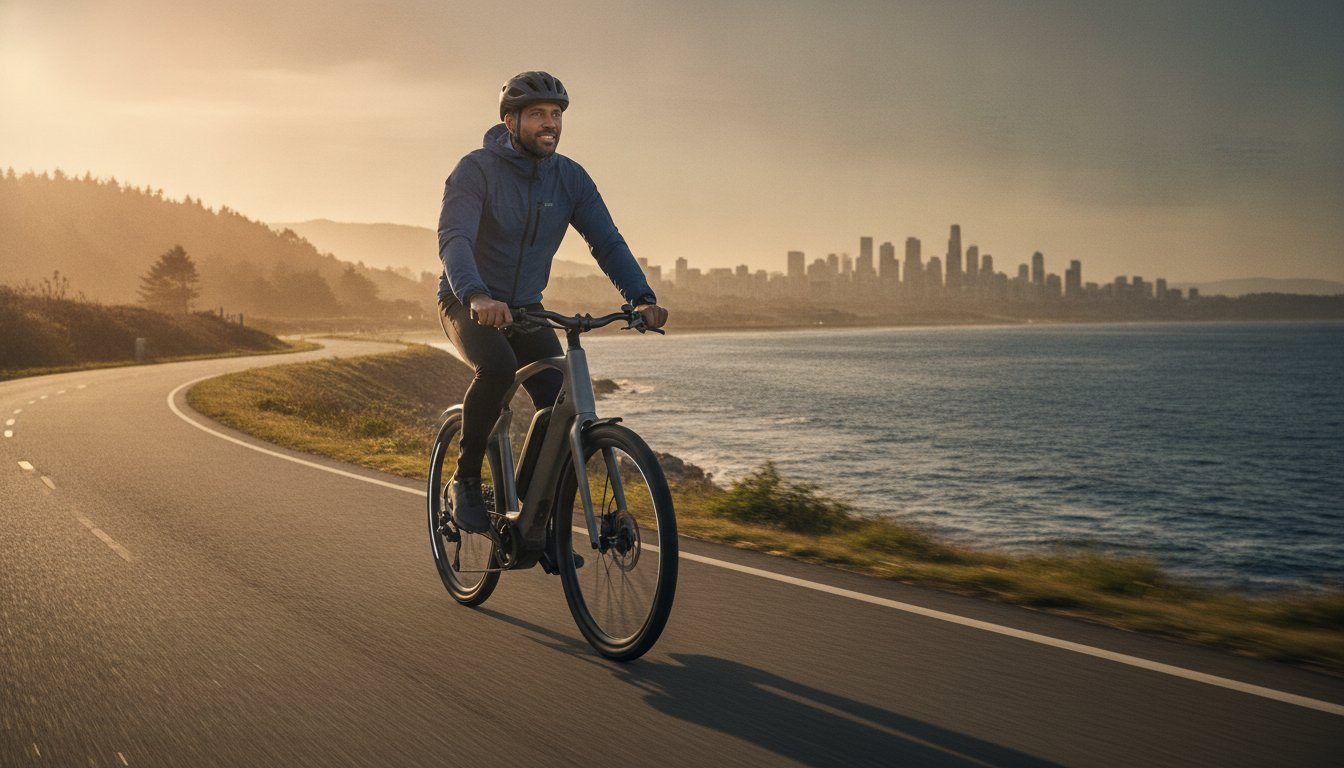
Why does a “100-mile” range estimate suddenly vanish the moment you hit your first real hill? You’ve likely felt that cold spike of range anxiety when your battery indicator drops faster than the miles on your odometer. It’s frustrating to navigate a sea of confusing specs like Watt-hours and Amp-hours while wondering if a long range electric bike can actually handle your specific daily route without dying halfway home.
We understand that a bike is an investment in your freedom and your commute. You deserve honesty about what these machines can do in the real world. This guide is designed to help you master the technical math of e-bike range so you can choose a setup with total confidence. We’ll show you exactly how to evaluate 2026 battery standards and maintain your bike for peak efficiency.
You’ll learn how to calculate your own “range reality” based on terrain and rider weight. We also cover the professional maintenance secrets, like eliminating brake drag, that can add miles to every charge. From understanding the energy density of 21700 cells to maximizing the lifespan of your battery, this is your roadmap to achieving maximum mileage on every single ride.
Key Takeaways
- Define the 2026 standard for a long range electric bike, which now sets a 60-mile baseline for real-world adventure and commuting.
- Use the Range Math Framework to factor in elevation gain and total payload, ensuring your bike choice fits your specific daily route.
- Compare different frame styles, from high-capacity models like the Himiway Zebra to aerodynamic urban commuters, to find the most efficient geometry for your needs.
- Extend your battery’s lifespan and maximize daily mileage by applying the 80/20 charging rule and mastering motor-efficient shifting techniques.
- Learn why professional assembly and optimized tire pressure are critical for eliminating mechanical resistance and reaching peak efficiency.
Defining the Long Range Electric Bike Standard in 2026
The standard has shifted. In 2026, a long range electric bike is no longer defined by a hopeful 30-mile estimate on a flat track. Today, the industry baseline for true long-range performance starts at 60 miles of real-world travel on a single charge. This evolution marks a transition from simple urban commuting to all-day adventure riding. Riders now expect their machines to handle a full day of exploration or a multi-day trek without the constant fear of a dead battery.
Much of this progress comes from the industry-wide adoption of 21700 lithium-ion cells. These cells offer approximately 20% more energy density than the older 18650 cells used in previous generations. This technology allows brands like Himiway and Mokwheel to pack more power into the frame without making the bike feel like a heavy motorcycle. It’s the difference between a bike that feels nimble on a trail and one that feels like a chore to handle.
You also need to distinguish between Pedal Assist (PAS) and throttle-only range. PAS uses your own physical input to multiply the motor’s output, often doubling the distance you can cover. If you rely solely on the throttle, you’re essentially using the battery as your only fuel source. In 2026, a bike might claim a 100-mile range, but that usually assumes you’re helping the motor at a lower assist level rather than twisting the grip and letting the bike do all the work.
Watt-Hours vs. Amp-Hours: The Only Specs That Matter
Marketing teams often highlight Amp-Hours because the numbers look impressive on a spec sheet. However, Amp-Hours only tell you the capacity of the battery at a specific voltage. To find the true size of your “fuel tank,” you must look at Watt-Hours. You calculate this by multiplying the Voltage (V) by the Amp-Hours (Ah). For example, a 48V 20Ah battery provides 960Wh of energy. Watt-Hours represent the universal currency of e-bike energy, providing a standardized way to compare different brands. When you compare a Denago Commute Model 1 to a heavier fat-tire model, the Watt-Hour rating is your most reliable guide for potential distance.
The Role of Motor Efficiency in Distance
A massive battery is useless if the motor wastes energy through heat or poor tuning. Mid-drive motors are the efficiency champions because they leverage the bike’s existing gears. This allows the motor to stay in its optimal RPM range whether you’re climbing a steep hill or cruising on a flat road. Hub motors, while often more affordable and robust, can be less efficient on long, sustained inclines where they can’t utilize the bike’s drivetrain.
The type of sensor your bike uses also dictates your range. Torque sensors are far superior to basic cadence sensors for distance. A torque sensor measures exactly how much force you apply to the pedals and matches it instantly. This prevents the motor from “overshooting” and wasting energy when you don’t actually need it. Higher wattage motors can provide more “oomph” for hills, but they also drain the battery faster if you don’t manage your power levels wisely.
How to Calculate Your Real-World Range (The Range Math Framework)
Stop trusting the sticker on the box. Most range estimates are calculated under artificial conditions: a flat track, zero wind, and a rider who weighs less than 160 pounds. To find your actual distance on a long range electric bike, you need a framework that accounts for your specific daily environment. Use these four steps to build your own range reality:
- Step 1: Audit your route. Check the total elevation gain. For every 1,000 feet of climbing, expect to lose about 100Wh of your total battery capacity regardless of the distance.
- Step 2: Factor in total payload. Add your body weight, the bike’s weight (usually 65 to 80 pounds), and your gear. Every extra 20 pounds increases the motor’s workload and reduces range by approximately 5%.
- Step 3: Apply the ’20Wh per Mile’ rule. For a standard ride on mixed terrain at moderate assist levels, use 20Wh per mile as your baseline. A bike with a 720Wh battery will safely get you about 36 miles.
- Step 4: Adjust for weather. Batteries are chemical devices that hate the cold. If it’s below 50°F, deduct 20% from your estimated total mileage.
This math might feel conservative, but it’s the only way to avoid the dreaded walk of shame with a dead bike. By calculating your “worst-case scenario” range, you ensure you always have a buffer for unexpected detours or headwinds. Real-world testing shows that even a high-capacity long range electric bike can struggle if these variables aren’t managed correctly.
The ‘Elevation Tax’: Why Hills Cost Double
Climbing a hill requires the motor to fight gravity, which is a massive drain on energy. While you might think descending “gives back” that power, it’s rarely a fair trade. Mechanical friction in the motor and wind resistance mean you only reclaim a fraction of the energy spent. If you’re using Google Maps to plan a route, look at the elevation profile first. A five-mile commute with a 500-foot gain will drain the battery faster than a ten-mile ride on a flat coastal path.
The Impact of Speed on Battery Drain
Air resistance is your biggest enemy at high speeds because drag increases exponentially. Riding at 28 mph (Class 3) requires significantly more energy than riding at 20 mph (Class 2). If you need to squeeze every last mile out of your battery, find your bike’s “Eco-Sweet Spot,” which is usually between 15 and 18 mph. This speed balance provides enough momentum to be efficient without the battery-killing drag of high-speed cruising.
If you’re unsure if your bike is performing at its peak, our safety inspection service can identify range-killing issues like brake drag or low tire pressure.
Comparing Long-Range E-Bike Categories and Frame Styles
Frame geometry and tire selection are often overlooked when shopping for a long range electric bike, yet they dictate how hard your motor has to work. A massive battery can be hampered by a frame that creates excessive drag or tires that fight against the pavement. Choosing the right category depends entirely on your primary terrain and how much physical comfort you require for multi-hour journeys.
Fat tire adventurers, such as the Himiway Zebra, are designed for maximum stability and traction. These bikes typically carry the largest battery capacities in the industry to compensate for their heavier frames and wider contact patches. While they’re the kings of off-road exploration, that extra rubber creates significant rolling resistance on asphalt. If your goal is strictly pavement commuting, you might find yourself using more Watt-hours per mile than necessary.
Urban commuters like the Denago Commute Model 1 represent the opposite end of the spectrum. These bikes prioritize efficiency with narrower tires and aerodynamic, upright geometry. They cut through the air and roll across the ground with minimal friction, allowing you to achieve impressive distances even with a standard-sized battery. For riders who need portability without sacrificing distance, folding models like the Heybike Tyson utilize high-density cells to provide surprising range in a compact package.
If your rides last four hours or more, comfort becomes a range factor. Full-suspension models like the Mokwheel Obsidian are “range monsters” because they reduce rider fatigue. When you aren’t being jarred by every pothole, you’re more likely to stay in a lower assist level and contribute more pedal power, which naturally extends your battery life.
Fat Tires vs. Commuter Tires: The Rolling Resistance Debate
Tire tread pattern is a silent range killer. Deep, knobby treads are essential for mud and sand, but they act like tiny speed bumps on flat roads, draining your battery faster. For a deeper dive into these trade-offs, our Master Guide to Fat Tire Electric Bikes explains how to balance grip with efficiency. You can optimize your range by adjusting your PSI; higher pressure reduces the tire’s footprint and rolling resistance, while lower pressure provides the “float” needed for soft terrain.
Single vs. Dual Battery Systems
Dual-battery systems are becoming the gold standard for anyone targeting 100+ mile rides. While a single integrated battery offers a sleek look and better protection from the elements, it has physical size limits. Dual systems allow you to draw power from two sources, reducing the “voltage sag” that happens when a single battery gets low. This setup also improves weight distribution if the batteries are placed strategically, keeping the bike’s center of gravity low for better handling during long-distance tours.

How to Maximize and Maintain Your E-Bike Range
Owning a long range electric bike is only half the battle. The other half is mastering how you operate and maintain the machine to ensure every Watt-hour translates into distance. Range isn’t a static number. It’s a result of system efficiency. If your motor has to fight against mechanical friction or poor riding habits, your 60-mile battery might only provide 40 miles of actual travel.
One of the most effective ways to preserve your capacity is the “80/20 Rule” for battery health. While it’s tempting to charge to 100% before every ride, lithium-ion cells degrade faster when kept at maximum or minimum voltage for long periods. For your daily commute, try keeping your battery between 20% and 80% charge. Save the full 100% charge for those weekend adventures where you truly need the maximum distance. This simple habit can prevent your “fuel tank” from shrinking prematurely over the years.
Mechanical efficiency is equally critical. Professional assembly is often the difference between a bike that glides and one that struggles. A common range killer is brake rub, where the pads slightly touch the disc even when you aren’t braking. This creates constant drag that forces the motor to work harder. We ensure every bike undergoes a professional assembly service to eliminate these hidden friction points before you ever hit the road.
Riding Techniques for Extra Miles
Your riding style dictates how fast the battery drains. Practice the “Soft Start” method by using your mechanical gears to get the bike moving before engaging the motor or throttle. Starting from a dead stop is the most energy-intensive action for a motor. By pedaling through the first few rotations, you save a significant burst of energy. Additionally, learn to manage your momentum. In urban environments, let off the PAS early when approaching a red light and coast to a stop rather than powering through until the last second and braking hard.
The Essential Maintenance Checklist for Range
Small maintenance tasks yield big results for distance. Check your tire pressure weekly. Low tires increase the contact patch and rolling resistance, which can easily rob you of five miles or more on a single charge. Keep your chain clean and well-lubricated to reduce drivetrain friction. For a complete efficiency protocol, refer to our guide on How to Maintain an Electric Bike, which covers the full security and performance standards required for long-distance riding.
Finding Your Distance Champion at Tartarian E-bikes
Choosing a long range electric bike is about more than just picking the largest battery size you can find. It’s about the synergy of high-quality components and the expert hands that put them together. At Tartarian E-bikes, we don’t just sell bikes; we act as your long-term partner in mobility. We curate our selection by focusing on high-torque, high-efficiency brands that prioritize real-world performance over flashy, unverified marketing numbers. Every model in our shop is selected because it meets our strict standards for durability and energy management.
We understand that transparency builds trust. That’s why we perform our own real-world testing on the bikes we stock. We take these machines out on the same hills and commutes you face every day. This allows us to give you an honest assessment of how a bike will perform under your specific payload. Whether you need to customize your ride with heavy-duty racks for touring or ergonomic seats for all-day comfort, we help you build a setup that actually reaches the finish line.
The Tartarian Advantage starts before you even take your first ride. Every bike includes professional assembly and a comprehensive safety inspection. As we discussed in previous sections, minor issues like brake rub or poorly indexed gears are silent range killers. Our technicians eliminate these friction points from day one. We ensure your bike leaves the shop at peak mechanical efficiency, giving you the best possible start for your first 1,000 miles and beyond.
Top Range Performers: Himiway and Mokwheel
If your version of a long-distance ride includes gravel paths and forest trails, the Himiway Zebra is our top recommendation. It’s an all-terrain powerhouse that uses high-capacity cells to overcome the rolling resistance of its fat tires. For those who want a blend of sophisticated power and efficiency, the Mokwheel Basalt and Obsidian models offer advanced motor tuning that stretches every Watt-hour. If you’re staying strictly on the pavement, the Denago City and Commute models are the undisputed efficiency kings. Their lightweight frames and low-resistance tires make them the perfect long range electric bike for urban explorers who value speed and agility.
Expert Support for Your Long-Distance Journey
Our relationship doesn’t end when you roll out of the showroom. We provide dedicated repair services designed to keep your motor and battery running like new. From precision brake adjustments to tire pressure optimization, we handle the technical details that preserve your range. Professional assembly is a requirement for anyone serious about battery longevity. When a bike is built correctly, the motor doesn’t have to fight the frame. This reduces heat and strain, which are the primary causes of early battery degradation. Ready to start your next adventure? Explore our premium e-bike collection and find the machine that fits your distance goals.
Take Control of Your Long-Distance Journey
Choosing a long range electric bike in 2026 is about more than just battery size. It’s about understanding the synergy between your route’s elevation, your motor’s efficiency, and the mechanical health of your machine. By applying the Range Math Framework and sticking to the 80/20 charging rule, you’ve already taken the most important steps toward eliminating range anxiety for good. Real-world distance is a result of consistent care and smart riding habits.
We believe that every rider deserves a bike that delivers on its promises. That’s why we include professional assembly with every purchase to ensure zero brake drag and optimized performance. Whether you need national shipping on premium brands or expert maintenance to keep your motor running like new, we have the tools and expertise to support your goals. It’s time to stop worrying about your battery indicator and start enjoying the freedom of the open road.
Ready to find your distance champion? Find your perfect long range electric bike at Tartarian E-bikes and ride with the confidence that only expert support can provide. Your next adventure is waiting.
Frequently Asked Questions
How far can a long range electric bike actually go on one charge?
A long range electric bike in 2026 typically achieves between 60 and 120 miles on a single charge. While some premium models with dual-battery systems claim over 200 miles, your actual distance depends heavily on the assist level and terrain. Most riders find that a 960Wh battery provides a reliable 40 to 50 miles even in demanding conditions with heavy throttle use.
Do I need a special license for a long range e-bike?
You don’t need a special license for most electric bikes in the United States or the European Union. As long as the motor is 750W or less and follows class speed limits of 20 to 28 mph, it’s legally treated like a standard bicycle. However, 2026 safety regulations now require bikes to have UL 2849 certification to ensure electrical systems meet strict fire safety standards.
How long does it take to charge a high-capacity e-bike battery?
Charging a high-capacity battery usually takes between 4 and 8 hours using a standard charger. Many 2026 models now support rapid charging technology, which can reach 80% capacity in about an hour. This is a major improvement over older systems. Always use the manufacturer-approved charger to protect the battery’s long-term health and ensure your safety during the process.
Can I add a second battery to my current e-bike to increase range?
Yes, many frames allow for a second battery to be added via external mounts or specialized racks. You’ll need a battery balancer or a specific dual-battery controller to manage the power draw safely between the two units. We recommend professional installation for this upgrade. This ensures the wiring is secure and the extra weight doesn’t negatively impact the bike’s balance or handling.
Does rider weight significantly affect the range of an electric bike?
Rider weight is a major factor in how far your bike can travel on a single charge. Every 20 pounds of additional payload can reduce your total range by approximately 5%. This happens because the motor must work harder to overcome inertia and gravity. Factoring in your gear and body weight is essential when using our Range Math Framework to plan long-distance trips.
What happens to the battery range in cold weather?
Cold temperatures can reduce your battery’s range by 20% or more once the thermometer drops below 50°F. Lithium-ion batteries rely on chemical reactions that slow down in the cold, leading to faster voltage drops. To combat this, store your battery indoors at room temperature and only mount it right before you ride to keep the cells at a functional temperature.
How many years will a long range e-bike battery last before needing replacement?
Most high-quality batteries last between 3 and 5 years before they lose significant capacity. This usually equates to 500 to 1,000 full charge cycles. You’ll know it’s time for a replacement when the battery no longer holds enough charge to complete your usual long range electric bike routes. Proper storage and charging habits are the best ways to extend this lifespan.
Is it better to charge my battery after every ride or wait until it’s empty?
It’s best to follow the 80/20 rule rather than charging to 100% after every short trip. Keeping the battery level between 20% and 80% reduces stress on the lithium cells and prevents premature degradation. Only charge to a full 100% when you know you have an exceptionally long ride planned. Never let the battery sit at 0% for long periods, as this can cause permanent damage.